 Xinchuan Server | Enterprise Server Hardware Supplier
U.3 vs U.2: Clearing Up Two Naming Confusions
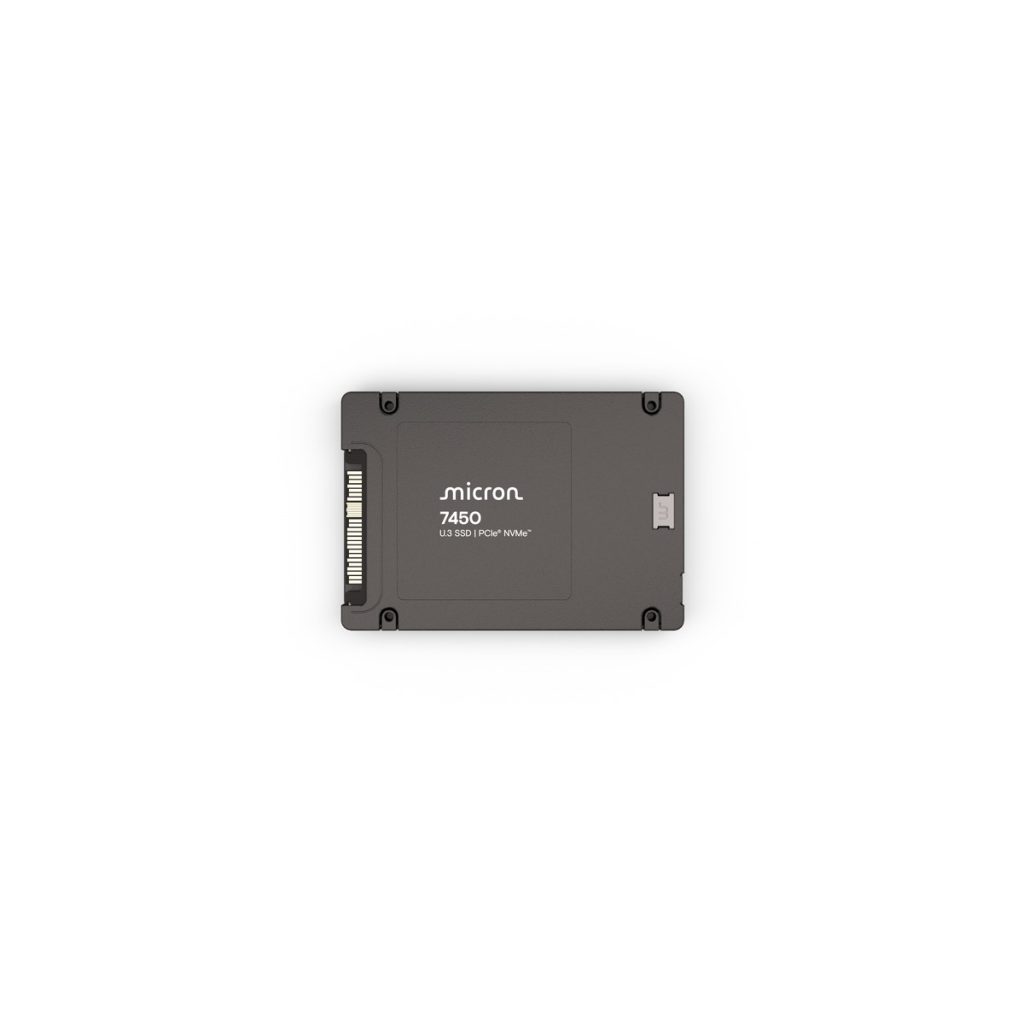
Myth one: U.3 and U.2 are incompatible interfaces. In practice, U.3 (SFF-TA-1001) is the evolution of U.2: a U.3 drive can operate in a U.2 bay (backward compatibility), while the U.3 specification also prepares the path for newer EDSFF form factors such as E1.S and E3.S. That means servers built around U.2 can use U.3 drives today without changing platforms.
Myth two: PCIe Gen4 SSDs are already obsolete in the Gen5 server era. For the vast majority of database, virtualization and cloud workloads, peak bandwidth is not the bottleneck—predictable QoS latency is. Micron positions the 7450 PRO around consistent, low-latency mixed random I/O (the vendor cites 99.9999% quality-of-service read latency within 2 ms for 4 KB mixed random workloads), which matters far more to transactional applications than extra sequential bandwidth, while Gen4 cost per TB remains clearly lower than Gen5. This is why Micron treats the 7450 as a mainstream datacenter workhorse.
Core Specifications
| Attribute | Specification |
|---|---|
| Interface | PCIe Gen4 x4, NVMe 1.4 |
| NAND | Micron 176-layer 3D TLC (CMOS under Array) |
| Form factors | U.3 7mm/15mm, E1.S 5.9/15/25mm, M.2 22×80/22×110 |
| Capacity (U.3) | 960GB / 1.92TB / 3.84TB / 7.68TB / 15.36TB |
| Sequential read / write | 6,800 MB/s / 5,600 MB/s (7.68TB) |
| Random read / write | 1,000,000 / 215,000 IOPS (7.68TB, 4K) |
| Typical latency | 80 us read / 15 us write |
| Endurance | 1 DWPD; 14,000 TBW (7.68TB), 28,000 TBW (15.36TB) |
| Reliability | MTTF 2,000,000 device hours; UBER <1 sector per 10^17 bits |
| Power | U.3: 12.1 W seq read / 16.6 W seq write |
| Temperature / warranty | 0-70 C operating / 5 years |
176-Layer NAND and Gen4 Performance
The 7450 PRO pairs Micron’s 176-layer 3D TLC NAND with a Gen4 controller to deliver up to 6,800 MB/s sequential read and 5,600 MB/s sequential write on the 7.68TB U.3 model, with 1,000,000 random read IOPS and 415,000 IOPS on 70/30 mixed random workloads. The simplified read algorithm and metal control gate NAND improve 99.9999% QoS read latency for small (4KB) mixed random workloads – the profile that SQL Server, Oracle, MySQL, RocksDB, Cassandra and Aerospike actually generate.

Form Factors and Capacity Options
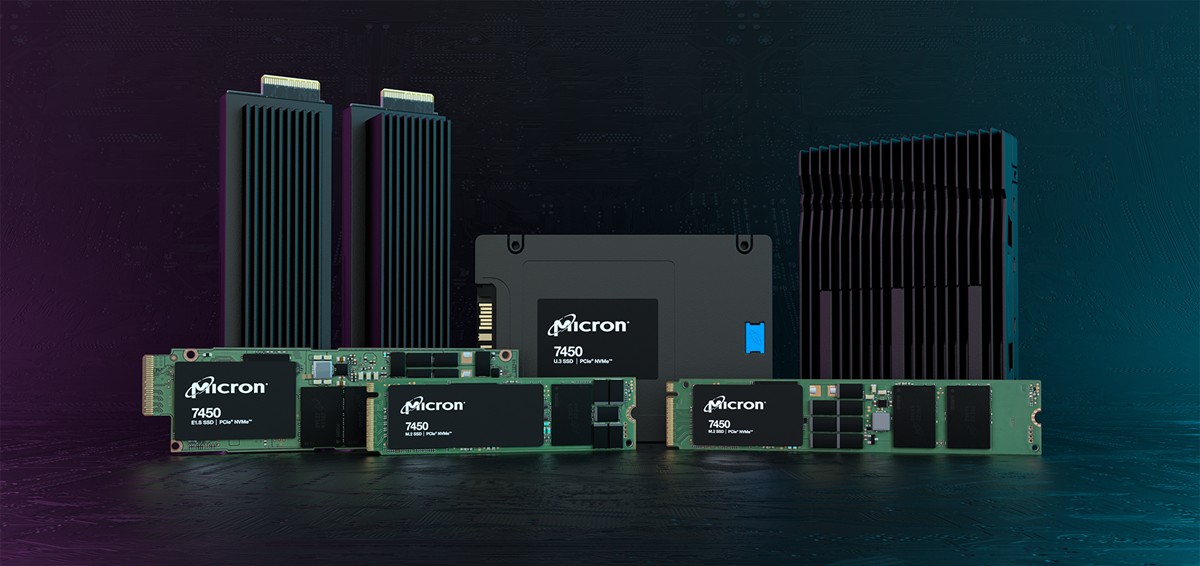
The 7450 family spans the broadest Gen4 form-factor range in the industry:
- U.3 7mm/15mm – standard 2.5-inch data center drive, U.2 backward compatible, dual z-heights broaden chassis options.
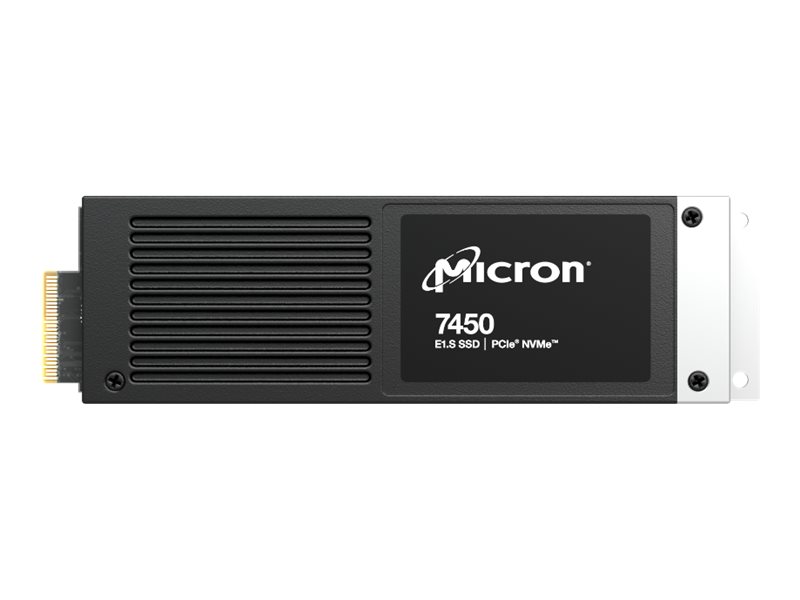
- E1.S 5.9/15/25mm – EDSFF form factor optimized for 1U platforms, including an industry-leading 7.68TB E1.S option for high-density NVMe.
- M.2 22×80/22x110mm – ultra-compact boot drives with Power Loss Protection, designed for server boot duty.
Capacities run from 400GB to 15.36TB, with up to 128 namespaces for multitenancy, 512/4096-byte sector support and TAA compliance for US Federal procurement.
Security: Secure Execution Environment
The 7450 PRO ships Micron’s unique Secure Execution Environment – an isolated security processor inside the SSD controller that physically separates security functions from the main data path. Around it: asymmetric roots of trust in immutable ROM (revocable), NIST-approved RSA 208/3072-bit key support, RSA delegation keys for customer key ownership, Secure Boot, key-based firmware updates (public-key authenticated) and key-based privileged access control. SED variants provide TCG Opal 2.01 / IEEE 1667, and the family is FIPS 140-3 Level 2 certified for regulated deployments.
Endurance: What 1 DWPD Really Buys
1 Drive Write per Day on a 7.68TB drive means you can overwrite the entire drive daily for the 5-year warranty period – 14,000 TBW. On the 15.36TB model that doubles to 28,000 TBW. For read-heavy mainstream workloads (virtualization, databases, cloud and object storage, VDI), that budget is rarely approached; write-heavy tiers should step up to the 7450 MAX (3 DWPD). Power Loss Protection and Data Path Protection ensure in-flight data survives power loss and bit errors are caught from PHY to NAND.
Buying FAQ
- Is U.3 compatible with my U.2 server? Yes – U.3 drives are backward compatible with U.2 slots.
- PRO or MAX? PRO = 1 DWPD read-intensive; MAX = 3 DWPD mixed-use for write-heavy tiers.
- Encryption? SED (TCG Opal 2.01 / IEEE 1667) and FIPS 140-3 Level 2 options available.
- Best-fit workloads? SQL/NoSQL databases, VDI, server virtualization, cloud and object storage, boot/cache tiers.
- Warranty? 5 years, backed by Micron’s enterprise SSD program.
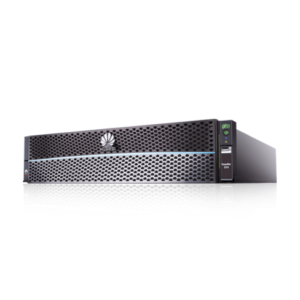
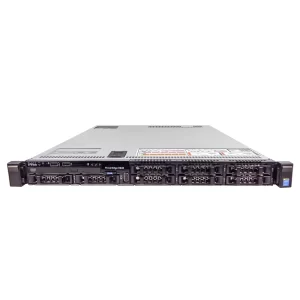
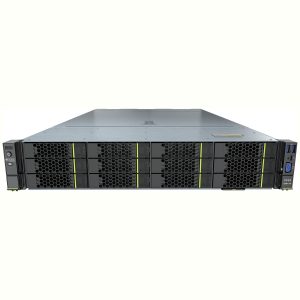
Pairing it with a server? The Dell PowerEdge R760 supports up to 24 x NVMe U.2 or 16 x E3.S Gen5, and the xFusion 2288H V7 up to 28 x NVMe. As an independent supplier we offer competitive pricing, 3-year warranty on new units and a 12-month warranty on refurbished units on servers, global shipping and free configuration consultation – contact us for volume pricing.
Related SSD models
Frequently asked questions
Which server models is this drive compatible with?
Listed specification: 7.68TB PCIe Gen4 NVMe Datacenter SSD. It is a standard enterprise drive in the form factor and interface listed above. Send your server model and we confirm compatibility, carrier and firmware level before shipping.
Do you provide the OEM part number cross-reference?
Yes. The OEM part number and our own part number are both listed on the quotation, so your team can check it against the existing BOM.
Can I mix capacities in one shipment?
Yes. Mixed capacity and mixed model orders are consolidated into one shipment, with each line item listed separately on the packing list.
Can you confirm condition and firmware before I order?
Yes. Before the order we send the exact part number, condition and, where relevant, the firmware level, for your written confirmation.
How are warranty and lead time handled?
Warranty and the lead time for this drive are stated on the quotation. For bulk orders we align the warranty start date across the whole batch.