 Xinchuan Server | Enterprise Server Hardware Supplier
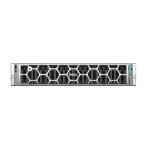
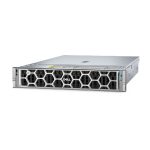
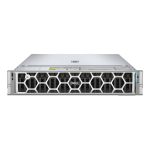
The R7725 Is the R7625 Replacement You Have Been Waiting For
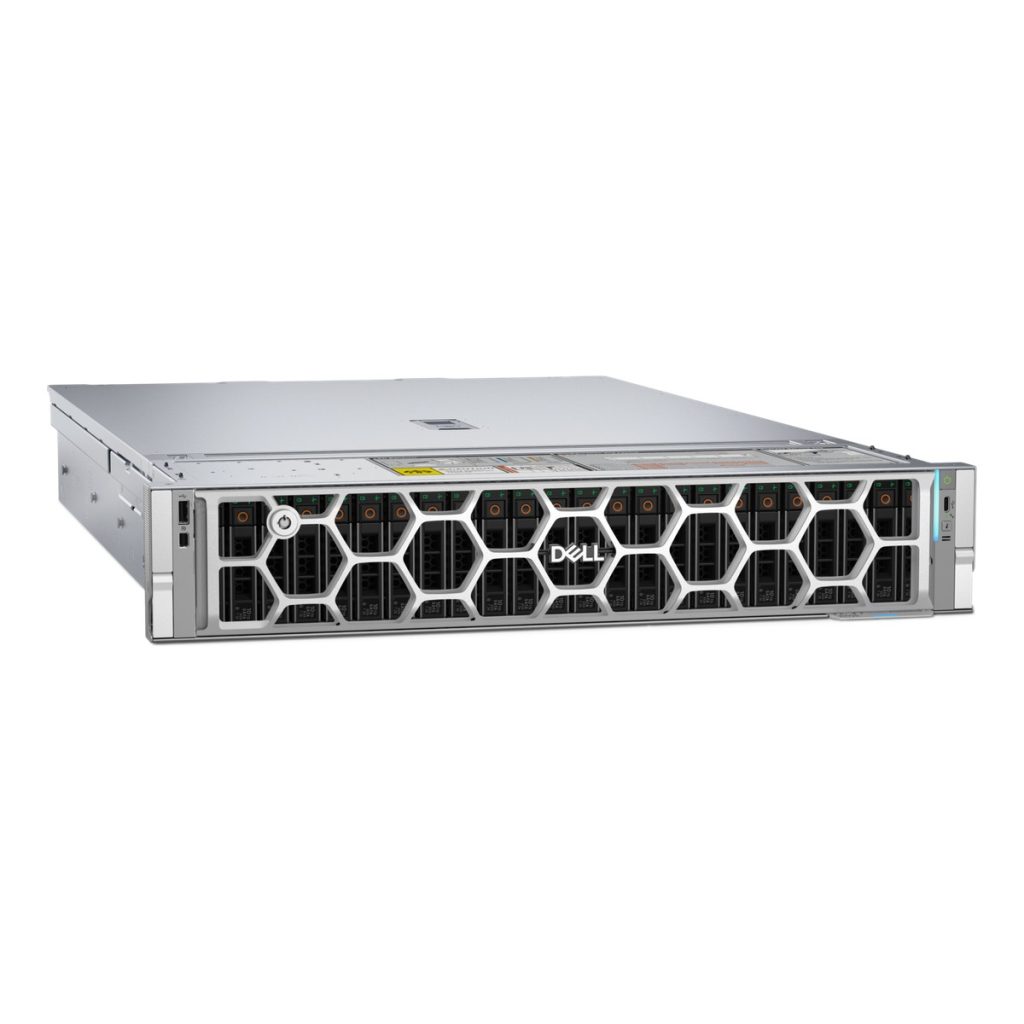
Dell’s 2U dual-socket AMD line moved from 4th Gen EPYC (Genoa, R7625) to 5th Gen EPYC 9005 (Turin-class Zen5) with the PowerEdge R7725. The jump is not incremental: up to 192 Zen5 cores per socket, DDR5 at 6400 MT/s, 450W-class accelerators, 40x E3.S Gen5 NVMe bays and iDRAC10 management. This page walks the platform spec and the migration path from R7625.
R7625 to R7725: What Changed
| Feature | R7625 (previous gen) | R7725 |
|---|---|---|
| Processors | 2x EPYC 4th Gen (Zen4), up to 128 cores | 2x EPYC 5th Gen 9005 (Zen5), up to 192 cores per CPU |
| Memory | 24 DDR5, up to 4800 MT/s | 24 DDR5, up to 6400 MT/s, 12 channels per CPU |
| Accelerators | 2x 300W double-width / 6x 75W single-width | 2x 450W double-width / 6x single-width |
| Storage front | Up to 24x 2.5-inch | Up to 40x E3.S Gen5 NVMe, 16x 2.5-inch + 8x U.2 NVMe, 24x 2.5-inch |
| Management | iDRAC9 | iDRAC10 with Redfish, Racadm, Quick Sync 2, OME APEX AIOps |
| Power | 800-3200W options | 800-3200W Titanium incl. 3200W 200-240VAC/HVDC, M-CRPS 73.5mm/60mm |
| Weight | Max 34.4 kg | Max 25.1 kg – significantly lighter chassis |
| Depth | 772.13 mm with bezel | 802.4 mm with bezel |
The 192-core Zen5 ceiling plus 6400 MT/s memory directly benefits data warehouse, eCommerce transaction tiers, databases and HPC – the workloads Dell targets for this platform.

Platform Specifications
| Attribute | R7725 |
|---|---|
| Form factor | 2U rack; 86.8 x 482 x 802.4 mm with bezel (801.51 mm without); max 25.1 kg |
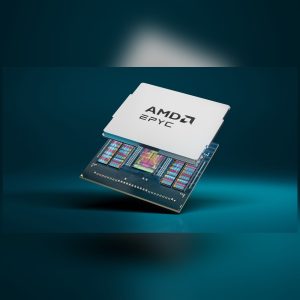
| Processors | 2x 5th Gen AMD EPYC 9005 (Zen5), up to 192 cores per CPU, 500W TDP; CXL 2.0 Type 3 memory |
| Memory | 24 DDR5 RDIMM ECC slots (12 channels per CPU), up to 6400 MT/s |
| Storage | Up to 40x E3.S Gen5 NVMe; 16x 2.5-inch SAS/SATA + 8x U.2 NVMe; 24x 2.5-inch; 12x 3.5-inch; boot via BOSS-N1 DC-MHS (2x M.2 NVMe HW RAID 1) |
| PCIe | Up to 8x Gen5 x16 slots; rear OCP FLOP (DC-MHS compliant); PCIe link encryption |
| GPU | Up to 2x 450W double-width or 6x single-width accelerators |
| RAID | PERC 12/13 front, PERC 13 external options; FPGA PESTI support; software RAID N/A |
| Management | iDRAC10, iDRAC Direct, Redfish RESTful API, Racadm CLI, Quick Sync 2, OME + APEX AIOps |
| Security | TPM 2.0 (FIPS, CC-TCG), Secure Erase, silicon root of trust, Secured Component Verification, System Lockdown |
| Power | Dual hot-swap redundant: 3200W Titanium (200-240VAC/HVDC), 2400W Titanium, 1800W, 1500W, 1400W -48VDC options; M-CRPS form factor |
| OS | Ubuntu Server LTS, Windows Server with Hyper-V, RHEL, SLES, VMware ESXi (Dell-certified releases) |

Migration Path from R7625
- Inventory the R7625 fleet: record guest core counts, memory working set and NVMe layout; Zen5’s 192-core ceiling typically halves the node count.
- Validate the OS layer: confirm hypervisor and RHEL/Ubuntu versions are supported on EPYC 9005 – most 2024+ releases are; older kernels may need a minor bump for Zen5.
- Move data on Gen5: restore databases onto E3.S Gen5 NVMe; 6400 MT/s DDR5 reduces column-scan and in-memory latencies.
- Cut over per workload: eCommerce and data warehouse tiers first, HPC batch last, keeping one R7625 node as rollback until the window closes.
Where the 450W GPU Headroom Matters
The R7625 topped out at 300W double-width accelerators; the R7725 supports 2x 450W cards. For inference and fine-tuning nodes that need a single high-power accelerator plus dual-socket compute, the R7725 replaces a separate GPU box – see our on-prem AI inference guide for accelerator cluster patterns. The 3200W Titanium PSU pair handles the worst-case power envelope with 1+1 redundancy.

Front Bay Configurations
Five front-bay layouts are offered on this chassis, and the spread between them is the widest in the AMD line: from a bare compute node with no backplane to forty E3.S Gen5 bays carrying a full all-NVMe database tier. The backplane is fixed at order, so this is the one decision that cannot be revisited after delivery.
The forty-bay E3.S configuration is the headline. It puts more Gen5 NVMe devices in a 2U chassis than most storage arrays delivered five years ago, and on a dual-socket EPYC 9005 platform with 128 lanes of Gen5 per CPU there is enough fabric to feed them. The 2.5-inch options exist for buyers with existing SAS or U.2 stock, and the twelve-bay 3.5-inch configuration exists for capacity-tier work where spinning media still makes economic sense.
Rear bays are worth specifying at the same time. A pair of rear E3.S or 2.5-inch drives gives you a physically separate tier for logs, boot mirrors or a fast recovery copy, without consuming a front bay that could hold production data.
| Configuration | Media | Where it fits |
|---|---|---|
| 40 × E3.S Gen5 | E3.S NVMe | All-NVMe database or analytics tier |
| 24 × 2.5-inch | SAS, SATA or NVMe | Mixed fleets reusing existing drive stock |
| 16 × 2.5-inch + 8 × U.2 | Mixed SAS and NVMe | Two-tier storage inside one chassis |
| 12 × 3.5-inch | SAS or SATA | Capacity tier, object and backup targets |
| No backplane | External storage only | Compute nodes attached to a SAN |
| Rear 2 × 2.5-inch or E3.S | SAS, SATA or NVMe | Logs, boot mirror, recovery copy |
| BOSS-N1 DC-MHS | 2 × M.2 NVMe RAID 1 | OS boot, independent of the data backplane |
Power Budget: Matching PSUs to CPU and GPU Load
The R7725 takes 500 W processors and 450 W accelerators in the same chassis, which puts the worst-case envelope well above what the previous generation needed. Two 500 W CPUs alone are 1,000 W before memory, drives and fans are counted; add two 450 W GPUs and the compute load reaches 1,900 W, which is why the 3,200 W Titanium pair exists.
In practice most builds do not run CPU and GPU at peak simultaneously. An inference node spends its life with the accelerators loaded and the CPUs comparatively idle, while a database node has no GPUs at all and sits comfortably on a 1,800 W or 2,400 W pair. Size for the real workload profile rather than the datasheet maximum, but leave headroom for the 1+1 redundancy to survive a single supply failure at full load.
The 3,200 W units require 200–240 VAC or HVDC input. That is a rack-level decision as much as a server decision: confirm the PDU outlet type and the per-outlet current rating before committing, because a 3,200 W supply on a 120 V feed is not a configuration that exists.
| Rating | Typical build |
|---|---|
| 800 W | Light single-tier builds with modest drive counts |
| 1,100 W | Standard dual-socket compute, no accelerators |
| 1,500 W | Full memory population, moderate drive count |
| 1,800 W Titanium | Full memory plus dense NVMe, no GPU |
| 2,400 W Titanium | Maximum CPU and drive load, or one 450 W GPU |
| 3,200 W Titanium | 2 × 500 W CPUs plus 2 × 450 W GPUs |
| 1,400 W −48 VDC | Telco and central-office DC racks |
Buying a Used or Refurbished R7725
The R7725 is a recent platform and the second-hand supply reflects that: mostly cloud and service-provider decommissions, generally well specified, and priced close to new. The savings come from configuration fit rather than from age.
Confirm the front backplane first, since the difference between a forty-bay E3.S chassis and a twenty-four-bay 2.5-inch chassis is the difference between an all-flash node and a mixed-media one. Confirm the PSU pair and its input class, because a 3,200 W build needs the right rack power and a mismatched single supply is expensive to source. Confirm whether the build was specified with DLC, since that determines the rack plumbing. And confirm the iDRAC10 licence tier, because System Lockdown and full telemetry depend on the Enterprise or Datacenter entitlement.
Ask for the processor SKU rather than the core count. EPYC 9005 spans a wide range of core counts, TDPs and cache sizes under the same generation name, and a 192-core part and a 128-core part are materially different machines at the same model number.
Detailed Specs, Dimension by Dimension
Networking
- Rear OCP FLOP slot (DC-MHS compliant) carries OCP NIC 3.0 mezzanine modules
- Up to 8x PCIe Gen5 x16 slots for full-height NICs and DPUs at 32 GT/s
- PCIe link encryption supported end-to-end for sensitive fabrics
Front and Rear I/O
- Front I/O per config: USB and iDRAC Direct (Micro-AB) on the front panel; optional metal bezel
- Rear: dedicated iDRAC Ethernet port, USB ports and video output; OCP FLOP on the DC-SCM
- No LCD – this platform uses the metal bezel option for rack identification
Riser and PCIe Architecture
- 8x Gen5 x16 slots across risers; plan slot-to-NUMA affinity for latency-sensitive database traffic
- Bifurcation supported for x8/x8 and lower splits where the riser allows
RAID and Boot
- Front PERC 12 (H965i) or PERC 13 class; external PERC 13 for expansion enclosures
- BOSS-N1 DC-MHS: hardware RAID 1 with 2x M.2 NVMe (480GB/960GB) for OS boot
- Software RAID not offered – use PERC or hardware controllers for parity RAID
Security
- TPM 2.0 FIPS and CC-TCG certified, Secure Erase, silicon root of trust
- Secured Component Verification hardware integrity check at boot
- System Lockdown (requires iDRAC10 Enterprise or Datacenter entitlement)
Management
- iDRAC10: remote console, virtual media, telemetry streaming, lifecycle controller
- Redfish RESTful API, Racadm CLI, iDRAC Direct, Quick Sync 2 wireless
- OpenManage Enterprise with APEX AIOps Observability, Power Manager, Services and Update Manager plugins; vCenter and System Center integrations; Ansible and Terraform modules
Physical and Environmental
- 2U rack; 86.8 x 482 x 802.4 mm (with bezel), 801.51 mm without; max 25.1 kg
- Operating ambient 10-35 deg C standard; DLC option for high-TDP CPU SKUs
Operating Systems
- VMware ESXi, Windows Server with Hyper-V, RHEL, SLES, Ubuntu Server LTS – Dell-certified matrix
Power
- Dual hot-swap redundant PSUs, M-CRPS 73.5mm and 60mm: 3200W Titanium (200-240VAC/240HVDC), 2400W Titanium, 1800W Titanium, 1500W, 1400W -48VDC and 1100W/800W Titanium/Platinum options
- Worst-case builds with 2x 500W CPUs and 2x 450W GPUs need the 3200W pair – verify PDU current at 200-240V
Workload Profiles
| Workload | Why the R7725 |
|---|---|
| Data warehouse / eCommerce | 192-core Zen5 per socket, 6400 MT/s DDR5 and 40x E3.S Gen5 NVMe sustain high concurrent scans and OLTP spikes |
| Databases (SQL, Oracle, PostgreSQL) | 12 memory channels per CPU; CXL 2.0 Type 3 expansion for very large buffer pools |
| HPC and batch | Highest core-per-rack ratio in the 2U AMD line; 500W TDP CPUs with DLC option |
| AI inference with a 450W accelerator | 2x 450W double-width GPU support in the same chassis as dual-socket compute |
Deployment Notes
- Rack depth: 802.4 mm with bezel – verify rail depth in 1000mm cabinets; cable management arms optional.
- Cooling: confirm the air-cooling configuration table for 500W TDP CPUs; order DLC where the guide requires it.
- Firmware baseline: use the latest iDRAC10 firmware and Dell certified OS matrix before production cut-over.
- License note: VMware and RHEL licenses price per core – the 192-core ceiling demands a core-license budget conversation before, not after, procurement.
Ordering Checklist
- Backplane choice: 40x E3.S vs 16x 2.5-inch + 8x U.2 NVMe vs 24x 2.5-inch – each is a different SKU; confirm the bay plan before quoting.
- CPU SKU: specify core count (up to 192) and TDP class; 500W SKUs may require DLC – Dell’s configurator will flag it.
- Memory speed: 6400 MT/s requires 1 DPC class DIMMs; mixing ranks or 2 DPC drops to the platform’s supported speed.
- PSU pair: 3200W Titanium for GPU/large-NVMe builds, 1400W -48VDC for DC data centers; order matching pairs only.
- iDRAC entitlement: Enterprise tier for System Lockdown, telemetry and virtual media.
- Spares: one BOSS-N1 module, one 3200W PSU and one E3.S drive per cluster keeps MTTR in minutes.
Deployment Snapshot: Data Warehouse Refresh
A retailer replaced four R7625 nodes with two R7725s for its eCommerce data warehouse. Zen5 core count allowed the same workload on half the nodes, DDR5 6400 MT/s cut ETL job runtime by roughly a third, and the 40x E3.S Gen5 NVMe layout carried the fact tables at Gen5 bandwidth. After decommissioning the legacy nodes, rack power dropped from 7.6kW to 4.1kW and the warehouse query SLA improved – a pattern we see consistently on the 9005 migration.
With 192 Zen5 cores per socket, 6,400 MT/s DDR5 and up to forty E3.S Gen5 NVMe bays in a 25.1 kg 2U chassis, the R7725 is the density benchmark for the AMD line. Planning an AMD platform refresh? Contact us for a migration worksheet with core-to-memory ratios, NVMe layout and PSU sizing against your actual power rate.
Frequently Asked Questions
What is the biggest NVMe configuration?
Forty E3.S Gen5 bays on the front, plus an optional pair of rear E3.S drives. That is enough for a 2U all-NVMe database or analytics node without any external storage.
What is the maximum memory, and at what speed?
Twenty-four DDR5 RDIMM slots, twelve channels per CPU, running at up to 6,400 MT/s. With 256 GB RDIMMs the ceiling is 6 TB. CXL 2.0 Type 3 memory devices are supported for expansion beyond the DIMM ceiling.
How does the R7725 compare with the R770?
Both are 2U dual-socket with eight Gen5 slots. The R7725 is AMD EPYC 9005 with 24 DIMM slots and a 192-core ceiling; the R770 is Intel Xeon 6 with 32 DIMM slots and an 8 TB memory ceiling. Choose the R7725 for core density per socket, the R770 for memory capacity.
Does it support CXL memory?
Yes — CXL 2.0 Type 3 memory devices. Type 1 and Type 2 accelerators are not supported on this platform.
Is liquid cooling required?
Direct Liquid Cooling is optional and required only for certain high-TDP CPU SKUs. Specify it at quote time if you intend to run the 500 W parts.
Is it compatible with R7625 rails?
No. The R7725 is 802.4 mm deep with the bezel, against 772.13 mm on the R7625, and uses its own rail kit. Order R7725-specific rails and cable management arms.
Can it run the same hypervisor as the R7625?
Yes, subject to a firmware and OS-matrix check. VMware ESXi 8 and current RHEL, SLES and Ubuntu releases are certified on EPYC 9005; older kernels may need a minor version bump.
What accelerators does it take?
Two 450 W double-width cards or six single-width cards. That is up from 300 W on the R7625, which is what lets a single inference node replace a separate GPU box.
Can the configuration be changed before shipping?
Yes. CPU, memory, drives, RAID card, power supply and rails can all be configured to your requirement. Send the target specification and we quote against it.
Are the servers tested before dispatch?
Every unit is powered on, firmware-checked and burn-in tested before dispatch. Test logs or photos can be shared on request.
Do you supply rails, bezel and cable management arm?
Rails and accessories are quoted separately or bundled. Tell us the rack depth and we confirm the right rail kit for the 802.4 mm chassis.
Can you confirm the exact model, part number and condition before I order?
Yes. Before the order we send the exact model, part number, condition and full configuration list — CPU, memory, drives, RAID card, power supply — for your written confirmation.
How are warranty and lead time handled?
Warranty and lead time are quoted per order, because they depend on configuration and destination. Condition grade is stated per unit, on every quote line. Nothing is assumed on our side.