 Xinchuan Server | Enterprise Server Hardware Supplier
When to Move: R760 Racks in the Xeon 6 Era
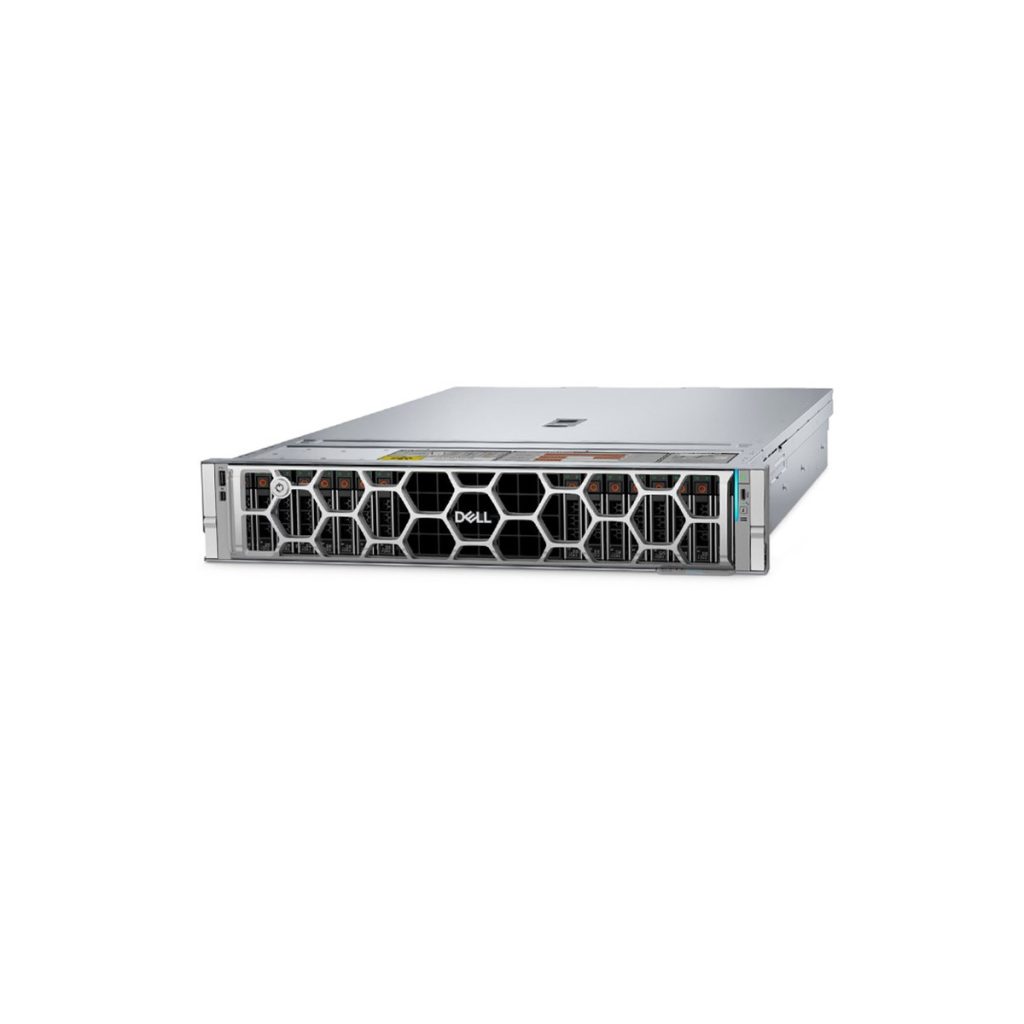
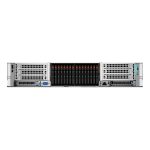
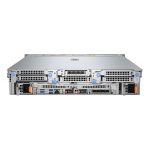
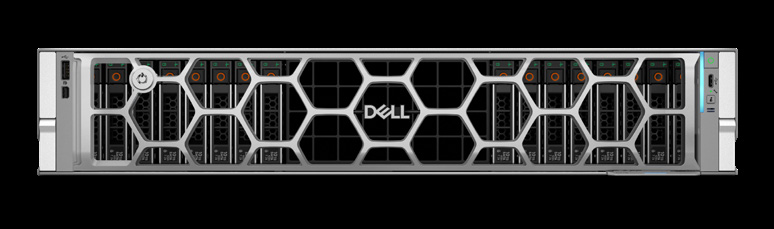
Your R760 generation racks are still under warranty and still running databases fine. So why would a refresh to the PowerEdge R770 make sense in 2026? Because the R770 is not an R760 with faster CPUs – it is a different chassis philosophy. Built on OCP DC-MHS, it makes front-I/O an order-time choice, moves storage to EDSFF E3.S Gen5, and carries 2 x Xeon 6 with up to 144 E-cores or 86 P-cores per socket. If your next 2U refresh is for AI inference, cloud-native density, or a large database that keeps growing, this is the migration path to evaluate.
PowerEdge R770 Specifications
| Component | Specification |
|---|---|
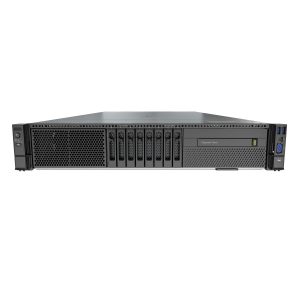
| Form factor | 2U rack – front I/O (cold aisle) or rear I/O (hot aisle) |
| Processor | 2 x Intel Xeon 6 – up to 144 E-cores or 86 P-cores per socket |
| Memory | 32 x DDR5 RDIMM, up to 8 TB, 6400 MT/s, registered ECC |
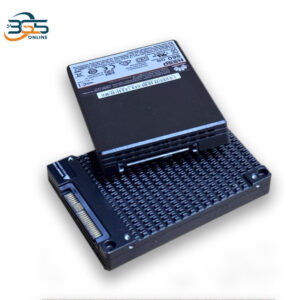
| Storage | 8-40 x EDSFF E3.S Gen5 NVMe (up to 2457.6 TB); 8/16 x 2.5-inch SATA/NVMe; rear 4 x E3.S |
| Boot | BOSS-N1 DC-MHS – HW RAID 1, 2 x M.2 NVMe |
| RAID | Front PERC H965i / H975i / H365i (tri-mode) |
| Network | 2 x OCP NIC 3.0 (front or rear), 1GbE-400GbE |
| GPU | Up to 2 x 450 W double-wide or 6 x 75 W FHHL |
| DPU | NVIDIA BlueField-3: B3220 2x200GbE or B3140H 1x400GbE |
| Management | iDRAC (10th gen), Redfish, RACADM, Quick Sync 2, NativeEdge |
| Dimensions / weight | 86.8 x 482 mm; 802.40-814.52 mm depth; 28.53 kg |
R760 to R770: What Actually Changes
| Attribute | R760 (Gen 4/5 Xeon) | R770 (Xeon 6) |
|---|---|---|
| CPU generation | Xeon Scalable 4th/5th (up to 64 cores) | Xeon 6 (up to 144E / 86P per socket) |
| Memory speed | DDR5 5600 MT/s | DDR5 6400 MT/s |
| Storage media | 12x 3.5″/24x 2.5″/16x E3.S | 8-40x E3.S Gen5 NVMe + rear E3.S |
| I/O placement | Rear I/O only | Front or rear I/O (order-time) |
| Chassis design | Traditional bolted modules | OCP DC-MHS, tool-less hot-swap |
| GPU ceiling | 2x DW / 6x SW | 2x 450W DW / 6x FHHL |
The two jump out: memory bandwidth (6400 MT/s at 32 DIMMs) and the E3.S Gen5 storage tier. Workloads that are memory-bandwidth- or NVMe-lane-bound see the biggest win; pure 3.5-inch bulk storage can stay on an R760-class platform.
Architecture Deep Dive
Networking
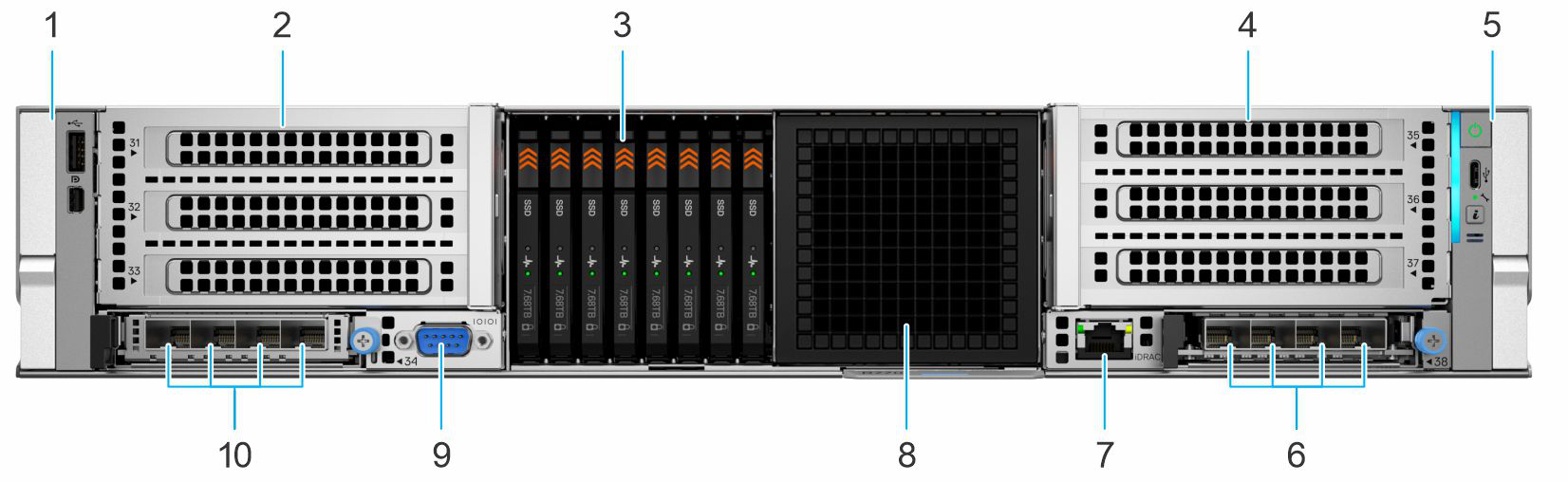
The R770 ships with 2 x OCP NIC 3.0 slots available on either the front or rear of the chassis, covering 1GbE through 400GbE. For smart-NIC deployments, NVIDIA BlueField-3 options (B3220 2x200GbE or B3140H 1x400GbE) bring in-network acceleration and DPU offload without occupying a riser slot – relevant for NVMe-oF, storage disaggregation and zero-trust workloads.
Front Panel & Serviceability
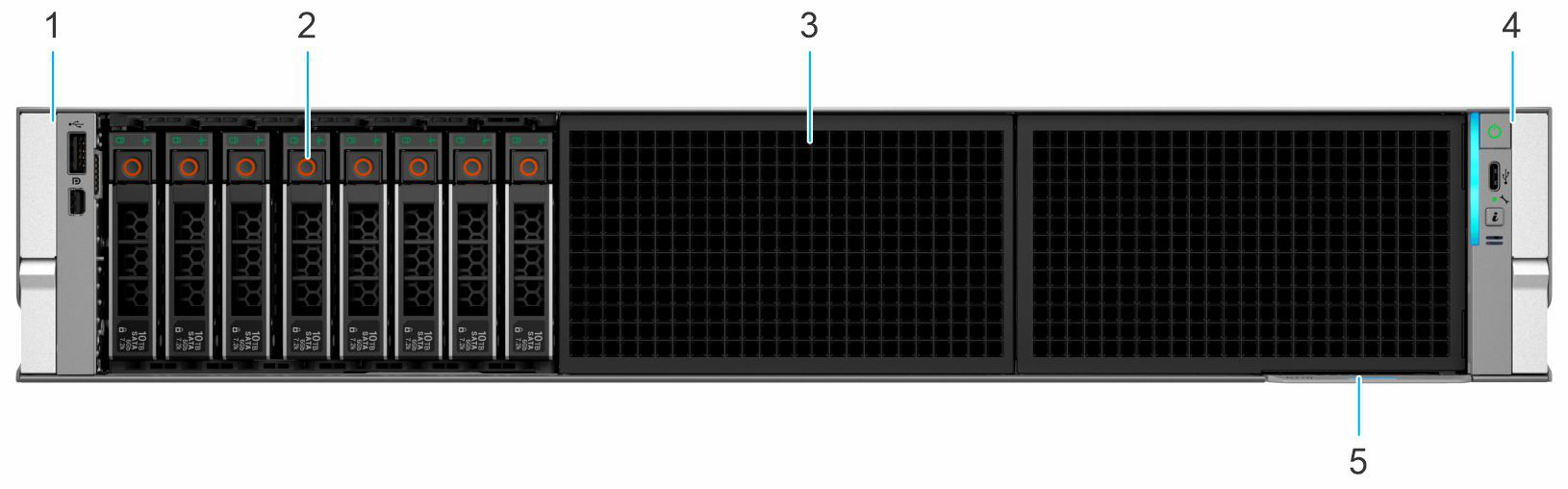
On the front-I/O model, USB, VGA, DB9 serial console and iDRAC Quick Sync 2 sit on the cold aisle – drive swaps and diagnostics no longer require entering the hot aisle. Power supplies, fan modules and the BOSS-N1 boot module are tool-less, hot-swappable units per the DC-MHS design.
Riser & PCIe Gen5
PCIe Gen5 riser architecture supports 2 x 450W double-width accelerators or 6 x FHHL cards. Slot allocation follows the chosen I/O configuration, so state the GPU and NIC plan in the quote – the same chassis serves an inference node or a dense virtualisation host.
RAID & Boot
Front PERC H965i / H975i / H365i controllers provide tri-mode (NVMe/SAS/SATA) support with hardware RAID. Boot comes from BOSS-N1 DC-MHS: hardware RAID 1 across 2 x M.2 NVMe, keeping boot off the data-bay budget.
Security
Platform security follows the PowerEdge baseline: TPM 2.0, UEFI Secure Boot, silicon root of trust, and signed/cryptographically verified firmware, with iDRAC10 hardening for out-of-band management paths.
Management
iDRAC10 (10th generation) provides remote console, virtual media, telemetry streaming, and Redfish/RACADM APIs – plus Quick Sync 2 for phone-based local config and NativeEdge for fleet orchestration. All management features work identically on front- and rear-I/O builds.
Power & Cooling
Redundant hot-swap PSU options up to 2400W with Platinum/Titanium efficiency, matched to the DC-MHS fan array. The 28.53 kg chassis with 802-815 mm depth fits standard 1000-1100 mm racks; verify rail depth for 600mm cabinets before ordering front-I/O versions.
Operating System Support
Certified across the mainstream enterprise stack: VMware ESXi 8, Windows Server 2022/2025, RHEL 9, SLES 15, and Ubuntu 22.04/24.04 LTS.
Accelerator Configurations for Inference
The R770’s GPU ceiling is the reason most buyers look at this chassis in the first place. Two configurations are offered, and they serve different jobs rather than representing a good-better-best ladder.
The two-card layout takes double-width accelerators up to 450 W each. That is the L40S, L40, H100 NVL and comparable inference-class part territory — enough for a per-node inference tier serving a production model, or for a small fine-tuning workload. The six-card layout takes single-width full-height half-length cards at 75 W each, which is the A2, L4 and similar low-power class. Six low-power cards deliver more aggregate throughput than two high-power cards on workloads that parallelise cleanly across small batches, and far less on workloads that need one large accelerator with wide memory bandwidth.
The decision therefore turns on the model rather than on the budget. A single large model with a wide KV cache wants the two-card layout. A fleet of small models, many concurrent lightweight inference requests, or a video transcode farm wants the six-card layout. Getting this backwards is the most expensive mistake available on this platform, because the riser and power configuration is fixed at order time.
| Configuration | Card type | Power per card | Best suited to |
|---|---|---|---|
| 2 × double-width | L40S / L40 / H100 NVL class | Up to 450 W | Single large model, wide KV cache, per-node inference tier |
| 6 × FHHL single-width | A2 / L4 class | Up to 75 W | Many small models, high concurrency, transcode farms |
| DPU option | NVIDIA BlueField-3 B3220 | OCP slot, 2 × 200GbE | NVMe-oF, storage disaggregation, zero-trust east-west |
| DPU option | NVIDIA BlueField-3 B3140H | OCP slot, 1 × 400GbE | High-bandwidth storage and RDMA fabrics |
| Mixed | Accelerators plus 400GbE NIC | Riser-dependent | Inference node that also needs a fast data path |
Storage Density: Up to 40 E3.S Bays in 2U
The R770 replaces the R760’s 3.5-inch and 2.5-inch options with an EDSFF E3.S Gen5 cage that scales from eight to forty bays in the same 2U chassis. At forty bays the raw ceiling is 2,457.6 TB, which is a different class of flash density from anything the previous generation offered in this form factor.
E3.S is not simply a smaller connector. The form factor is designed for Gen5 signalling at higher lane counts per drive, which is why a forty-bay R770 can saturate a Gen5 fabric in a way a twenty-four-bay 2.5-inch R760 cannot. For workloads that are NVMe-lane-bound — vector search, real-time analytics, disaggregated storage front ends — the bay count and the per-drive bandwidth both matter, and the R770 delivers on both.
The platform still offers 2.5-inch cages at eight or sixteen bays for buyers who need mixed media, and a rear cage for four additional E3.S drives. The rear option is worth considering when the front cage is fully committed to hot data and you still need a small flash tier for logs or a cache layer.
| Configuration | Media | Maximum raw capacity | Where it fits |
|---|---|---|---|
| 40 × E3.S Gen5 | E3.S NVMe | 2,457.6 TB | Maximum flash density, NVMe-lane-bound workloads |
| 24 × E3.S Gen5 | E3.S NVMe | Proportional to the 40-bay | Balanced density with airflow headroom |
| 16 × E3.S Gen5 | E3.S NVMe | Proportional to the 40-bay | Moderate flash tier, room for accelerators |
| 8 × E3.S Gen5 | E3.S NVMe | Proportional to the 40-bay | Entry flash builds |
| 16 × 2.5-inch | SATA or NVMe | Mixed-media dependent | Reuse of existing 2.5-inch stock |
| 8 × 2.5-inch | SATA or NVMe | Mixed-media dependent | Light mixed-media builds |
| Rear 4 × E3.S | E3.S NVMe | Additional flash tier | Logs, cache layer, boot-adjacent fast storage |
Power and Cooling in a 2U DC-MHS Chassis
The R770 carries redundant hot-swap supplies up to 2,400 W with Platinum and Titanium efficiency classes, and the fan array is a DC-MHS module set rather than fixed chassis fans. The practical consequence is that a two-card 450 W accelerator build and a forty-bay all-flash build can share the same chassis, with the supply rating and fan modules chosen to match.
The chassis is 86.8 mm high, 482 mm wide, and 802.40 to 814.52 mm deep, at 28.53 kg. That depth fits standard 1,000 to 1,100 mm racks, but front-I/O builds need rail depth verified against 600 mm cabinets before ordering — a shallow cabinet will not take this chassis regardless of which I/O side you choose.
| Item | Specification |
|---|---|
| Supply rating | Redundant hot-swap units up to 2,400 W |
| Efficiency class | Platinum or Titanium, matched to the build |
| Cooling | DC-MHS fan modules, tool-less hot-swap |
| Height | 86.8 mm (2U) |
| Width | 482 mm |
| Depth | 802.40–814.52 mm |
| Weight | 28.53 kg |
| Rack requirement | 1,000–1,100 mm racks; verify rail depth for 600 mm cabinets |
Buying a Used or Refurbished R770
The R770 is a current-generation platform, so the second-hand market is still thin and mostly consists of decommissioned cloud and inference capacity. That has two consequences: prices are closer to new than on older generations, and the configurations available are whatever the original buyer specified rather than a broad menu.
Verify the I/O side first, because it is an order-time decision that cannot be changed later — a front-I/O chassis and a rear-I/O chassis are different builds of the same model name. Verify the riser configuration and whether the accelerator layout is the two-card 450 W or the six-card 75 W version, since the two are not convertible. Verify which front cage is fitted and whether the rear E3.S cage is present. Confirm the supply rating, because a forty-bay all-flash build needs more headroom than an eight-bay build. And confirm the DPU or OCP NIC population if the original build carried BlueField-3, since those cards are a meaningful part of the value.
A refurbished R770 with a documented build sheet is a strong buy for an inference tier or a dense all-flash node. The failure mode is a listing that names the model and the processor but says nothing about the I/O side, the riser or the bay count — and on this platform those three details determine what the machine can actually do.
The Migration Path: 4 Steps
- Profile the workload. Measure core utilisation, memory bandwidth and NVMe IOPS on the R760 estate; label each rack “density-bound” or “capacity-bound”.
- Pick the I/O side. Hot-aisle-maintained DCs keep rear I/O; high-density cold-aisle layouts should order front-I/O R770s – this one decision changes your cable tray plan.
- Plan the E3.S tier. Migrate hot NVMe data to E3.S Gen5 (up to 40 per 2U); keep 3.5-inch bulk on the storage platform. Budget the boot BOSS-N1 per node.
- Sequence by cluster. Refresh inference/DB nodes first for the 6400 MT/s and PCIe Gen5 win, then scale-out nodes; see our R770 design review for the chassis analysis behind each step.
Frequently Asked Questions
R770 or R760 for our next refresh?
Memory-bandwidth-bound, NVMe-dense and AI-inference workloads justify the R770. Mixed 3.5-inch bulk storage workloads can stay on an R760-class platform, which remains cheaper per terabyte for spinning media and does not need the E3.S cage.
Can the R770 host GPUs for inference?
Yes, in one of two fixed layouts: two double-width accelerators up to 450 W each, or six full-height half-length cards up to 75 W each. The layout is chosen at order time and is not convertible afterwards, so the model being served determines the configuration rather than the other way round.
What processors does the R770 support?
Two Intel Xeon 6 processors, up to 144 E-cores or 86 P-cores per socket. The E-core SKU favours density-first container and inference fleets; the P-core SKU favours per-core performance for databases and licensed software.
What is the maximum memory configuration?
32 DDR5 RDIMM slots, registered ECC, up to 8 TB at 6400 MT/s. That is double the R760’s memory bandwidth ceiling and the single largest architectural change between the two generations.
Is the E3.S cage required?
No. Eight and sixteen bay 2.5-inch cages are available for SATA or NVMe media. The forty-bay E3.S Gen5 cage is the density play, and it is what most all-flash and inference buyers specify.
Front I/O or rear I/O — how do I choose?
Order front I/O when maintenance happens from the cold aisle and you want drive swaps and diagnostics without entering the hot aisle. Keep rear I/O in data centres that already maintain from the hot aisle. The choice changes the cable tray plan and cannot be altered after the chassis is built.
Does the R770 support DPUs?
Yes. NVIDIA BlueField-3 options are available in the OCP slots — B3220 with 2 × 200GbE or B3140H with 1 × 400GbE — for NVMe-oF, storage disaggregation and zero-trust east-west traffic. They occupy OCP slots rather than riser slots.
What RAID controllers are available?
Front PERC H965i, H975i and H365i controllers, all tri-mode across NVMe, SAS and SATA with hardware RAID. Boot is handled separately by the BOSS-N1 DC-MHS module with two M.2 NVMe drives in hardware RAID 1.
What rack depth does the R770 need?
The chassis is 802.40 to 814.52 mm deep and weighs 28.53 kg. It fits standard 1,000 to 1,100 mm racks; verify rail depth before ordering if you are working with 600 mm cabinets.
Can the configuration be changed before shipping?
Yes. CPU, memory, drives, RAID card, power supply and rails can all be configured to your requirement. Send the target specification and we quote against it.
Are the servers tested before dispatch?
Every unit is powered on, firmware-checked and burn-in tested before dispatch. Test logs or photos can be shared on request.
Do you supply rails, bezel and cable management arm?
Rails and accessories are quoted separately or bundled. Tell us the rack depth and we confirm the right rail kit for the chassis.
Can you confirm the exact model, part number and condition before I order?
Yes. Before the order we send the exact model, part number, condition and full configuration list — CPU, memory, drives, RAID card, power supply — for your written confirmation.