 Xinchuan Server | Enterprise Server Hardware Supplier



Same SSD, Three Different Prices: The Lenovo SAS Read-Tier Trap
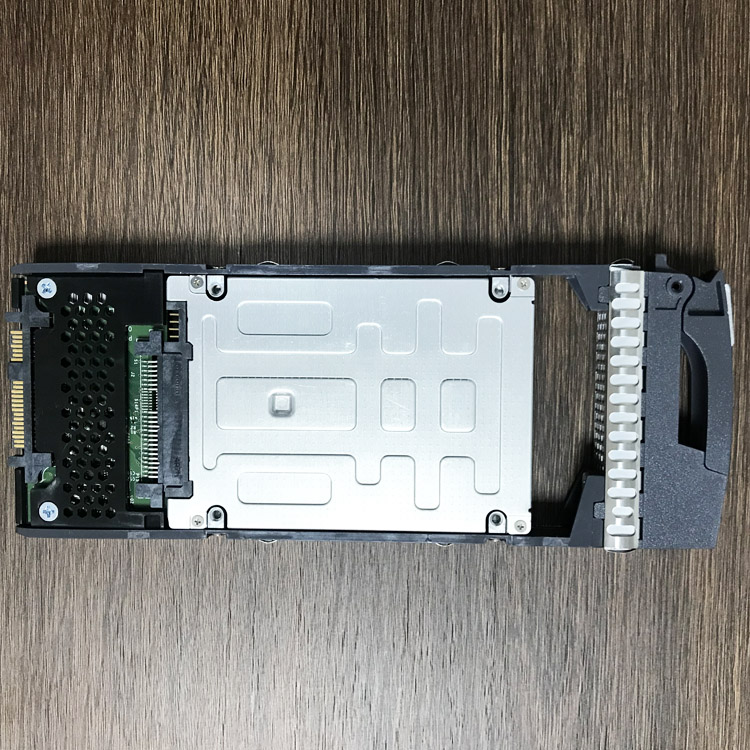
Search “1.92TB SAS SSD” and the results vary wildly – not because the drives differ, but because sellers blur read-intensive, mixed-use and high-endurance classes into one SKU. This page covers the Lenovo-branded PX05SRB192: a 1.92TB, 2.5-inch, SAS 12Gb/s read-intensive enterprise SSD built by Toshiba (now KIOXIA) for Lenovo, with the label data and procurement checks that keep the quote honest.
What the Label Actually Tells You
| Field (verified on unit) | Value |
|---|---|
| Brand | Lenovo Storage (manufactured by Toshiba / KIOXIA) |
| Model | PX05SRB192 |
| Capacity | 1.92 TB |
| Form factor | 2.5-inch |
| Interface | SAS 12Gb/s (dual-port capable) |
| Lenovo part (1P) PN | 4XB7A74951 |
| Lenovo FRU | 02JH877 |
| Power ratings (label) | +12V 1.40A / +5V 1.80A |
| Origin | Made in Philippines |
The FRU and 1P part numbers are the SKU of record for Lenovo servers: quote by FRU, not by “compatible” descriptions, and the drive lands in the ThinkSystem parts matrix without support surprises.

Read-Intensive vs Mixed-Use: Know Which Tier You Are Buying
Enterprise SAS SSD tiers exist because write endurance is expensive. The PX05SRB is the read-intensive tier – the right choice for boot volumes, read caches, VDI images and analytics staging, where writes are a small fraction of I/O. The mistake is buying a mixed-use or high-endurance drive “to be safe” (paying 30-50% more for endurance you never use) – or the reverse, buying a consumer SATA SSD and calling it enterprise. Match the tier to the workload:
| Workload pattern | Correct tier | Why |
|---|---|---|
| Boot / OS volumes | Read-intensive (this drive) | Writes are tiny; endurance budget is barely touched |
| Read caches, VDI golden images | Read-intensive | Dominated by reads after build |
| Database logs / write-heavy ingest | Mixed-use or higher | Daily writes exceed read-tier endurance |
Interface and Compatibility Checks
- SAS vs SATA: a SAS 12Gb/s drive does not fit a SATA-only backplane port, and vice versa. Confirm the server’s backplane and controller support SAS before ordering.
- Controller: any SAS 12Gb/s HBA/RAID controller (e.g. PERC-class or Lenovo ThinkSystem RAID adapters) presents this drive natively; no driver needed at the OS layer.
- Dual-port: SAS dual-port capability supports multipath configurations on storage-array style deployments – a real advantage over SATA for availability builds.
- Density: 1.92TB in 2.5-inch 7mm – fits standard 2.5-inch bays in ThinkSystem 1U/2U servers.
Deep Specs: Interface, NAND, Endurance and Power
| Dimension | PX05SRB192 (verified / class) |
|---|---|
| Interface rate | SAS 12Gb/s per port (dual-port capable) – up to ~1.2 GB/s line rate per port before protocol overhead |
| NAND | Toshiba 3D TLC, read-intensive class |
| Endurance class | Read-intensive (boot / cache / VDI-image tier), not for high-write workloads |
| MTBF | Enterprise-class rating (2,000,000-hour class for the PX05S family) |
| Latency | Solid-state sub-millisecond access; SAS dual-port adds path redundancy, not latency |
| Power (label rated) | +12V 1.40A and +5V 1.80A – ~25 W class peak input, idle well below |
| Form factor | 2.5-inch, 7mm class – standard enterprise SAS bay |
MTBF is stated as family class; the label-verified rows (interface, power, form factor) are exact. Performance figures vary by controller and workload; ask for benchmark runs on your platform.
Deployment Scenarios: Three Configs That Fit the Tier
1. Boot / OS mirror (RAID 1)
A pair of 1.92TB PX05SRB drives in hardware RAID 1 covers OS, hypervisor and pagefile space for a dense virtualization node. Endurance is a non-issue – boot writes are a rounding error on a read-tier drive – and the 12Gb/s SAS interface keeps boot and log reads fast. This is the highest-volume use of the part.
2. VDI golden images and linked clones
VDI reads are dominated by image reads at boot storm; writes land on the delta disk, ideally on a separate mixed-use tier. A 1.92TB read-tier drive holds hundreds of linked-clone baselines, and the SAS dual-port path adds resilience for availability-focused VDI pods.
3. Analytics staging and read caches
ETL staging, BI marts and database read caches read hot and write cold. Read-intensive SAS delivers the capacity per dollar that NVMe cannot match in 12Gb/s backplanes, while keeping multipath availability for clustered workloads.
SAS Read-Tier vs NVMe: The Honest Comparison
| Criterion | SAS 12Gb/s read-tier (this drive) | NVMe Gen4 U.2/E3.S |
|---|---|---|
| Sequential bandwidth | Interface-limited (~1.1-1.2 GB/s per port class) | 6,800 MB/s class (Gen4) |
| Random IOPS | Hundreds of thousands class | 1M+ IOPS class |
| Dual-port / multipath | Native SAS dual-port | Dual-port on selected E3.S/U.2 SKUs |
| Per-GB cost in 12Gb/s bays | Lower | Higher |
| Best for | Boot, cache, VDI images, legacy 12Gb/s backplanes | Latency-critical DB, AI, all-flash density |
The two coexist in practice: NVMe for the hot tier, SAS read-tier for the warm tier. A 24-bay 2U with 12 SAS read-tier drives and 8 NVMe hot drives outperforms a uniform-NVMe build at a lower blended cost – which is exactly the tiering conversation we run in free configuration consultations.
Procurement Checklist for SAS SSD Orders
- Quote by FRU. Ask for the Lenovo FRU (02JH877) or 1P PN (4XB7A74951) in writing – a “compatible” listing without a part number is a red flag.
- Ask for the tier. Confirm read-intensive explicitly; a generic “enterprise SSD” quote may be any tier.
- Check the interface on paper. SAS 12Gb/s must match the backplane; many “SAS” listings are actually SAS/SATA hybrid or SATA-only media.
- Verify power-on hours. For new stock, require sealed units; for open-box, demand SMART data (power-on hours, writes) in the quote.
- Match the controller. Ensure the RAID/HBA generation supports 12Gb/s SAS for full throughput.
Lifecycle Management for a SAS Read Tier
- Wear telemetry. SAS drives expose SMART attributes (power-on hours, wear indicators, media errors) through the RAID controller and Lenovo XClarity – set thresholds and alerting at 80% of rated write budget.
- Replacement cadence. Read-tier drives in boot and cache roles typically outlive the server; replace on controller events (predictive failure) rather than on schedule, and keep one FRU-matched spare per 10 drives.
- Dual-port setup. On multipath-capable stacks, wire both SAS ports to separate expanders/controllers for path redundancy – the SATA alternative cannot offer this.
- Firmware. Apply the vendor firmware release that matches the Lenovo FRU and the controller generation; mismatched firmware is a common cause of slow SAS links.
New, Open-Box, or “Pulled”: Grading the Offer
The SAS SSD market has three price tiers, and the label tells you which one you are quoting:
- New sealed (recommended): full FRU, zero power-on hours, no SMART history – the only tier that carries the manufacturer-aligned support path.
- Open-box / tested: legitimate where the seller provides the SMART log (power-on hours, writes) in writing and a burn-in result; price drops but so does predictability.
- Pulled / pulled-from-service: attractive price, unknown history – acceptable only for lab and non-critical tiers, never for boot or cache volumes with an SLA.
Whichever tier you are quoted, the FRU and 1P part numbers are printed on the quote – no ambiguity about what you are buying.
Operational Notes
- RAID levels: RAID 1 for boot pairs, RAID 10 for read caches, RAID 5/6 for capacity tiers with one drive’s worth of parity overhead.
- Endurance accounting: read-intensive drives carry lower daily-write ratings than mixed-use – model the actual write rate per drive before deploying write-heavy workloads on them.
- Health monitoring: use the controller’s SMART passthrough and Lenovo XClarity telemetry to track wear and reallocate failed drives early.
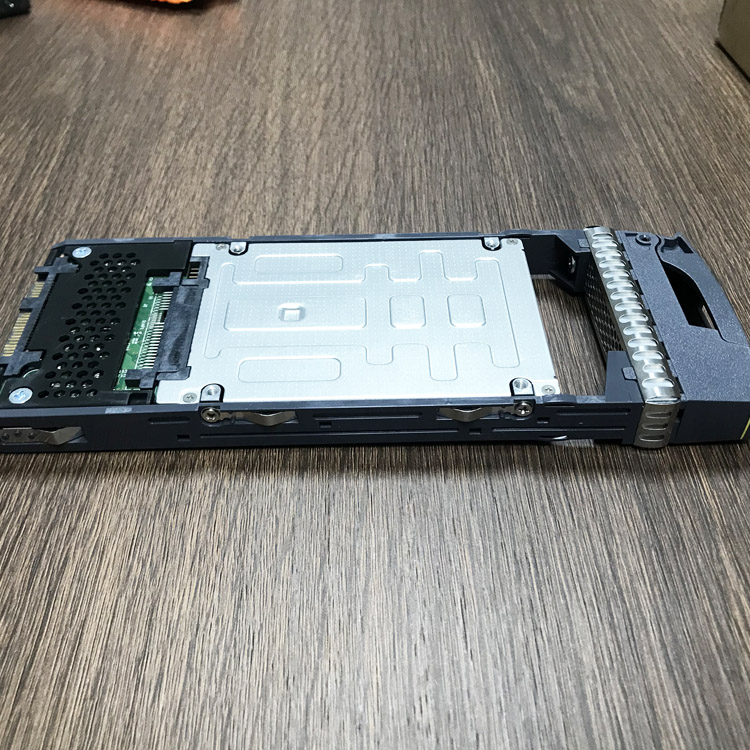
The PX05SRB192 sits at the intersection of three decisions: interface (SAS 12Gb/s), tier (read-intensive), and brand (Lenovo FRU). Get all three right on the quote – and verify the label – and the read tier behaves exactly as planned for its whole service life.
Buying FAQ
- Is this drive new or refurbished? The condition grade is stated per unit on your quote, with the Lenovo FRU 4XB7A74951 / 02JH877 printed on it; batch and SMART status are available on request.
- Does it fit my ThinkSystem? Any 2.5-inch SAS bay with a 12Gb/s controller – SR630/SR650-class and newer; confirm the backplane part in the service manual.
- Why not NVMe? NVMe wins on raw IOPS and latency; SAS read-tier wins on per-GB cost in 12Gb/s backplanes and on dual-port multipath – choose by workload, not fashion.
- What about the 3.84TB variant? The PX05SRB family scales up; contact us for 3.84TB pricing with the same FRU-level verification.
- Warranty? 3-year warranty on new units and a 12-month warranty on refurbished units, global shipping, competitive pricing.
- Is SAS 12Gb/s backward compatible? Yes – a 12Gb/s drive negotiates down to 6Gb/s on older controllers and backplanes, but you lose half the interface bandwidth; match 12Gb/s end to end for full speed.
- Can I mix this with SATA drives in one RAID group? No – never mix SAS and SATA media in the same array; rebuild behavior and failure modes differ. Keep groups homogeneous.
- What about the 960GB and 3.84TB sizes? The PX05SRB family spans the standard SAS capacity ladder; we quote all three with the same FRU-level verification.
Need a read-tier quote for a ThinkSystem fleet? We supply Lenovo FRU-verified SAS and NVMe tiers with competitive pricing, 3-year warranty on new units and a 12-month warranty on refurbished units, global shipping and free consultation on controller and backplane compatibility, including tier sizing across SAS and NVMe for your workload mix. Contact us for a fleet-level quote.