 Xinchuan Server | Enterprise Server Hardware Supplier
A Conversation Over Coffee Between a DBA and an Infrastructure Architect
DBA: “Our SQL Server data volume is running at 85% IOPS capacity on the current Gen3 NVMe drives. If we do not upgrade before Q4, the holiday traffic will tip us over.”
Infrastructure Architect: “We have two options. Option A: Samsung PM9A3 7.68TB at 1,000K read IOPS. Option B: Kioxia CM7 at 2,700K read IOPS on Gen5. Both are overkill for your actual workload — you are running at 420K peak IOPS on a 24-drive array. You need higher IOPS per drive, not higher peak throughput.”
DBA: “So what is Option C?”
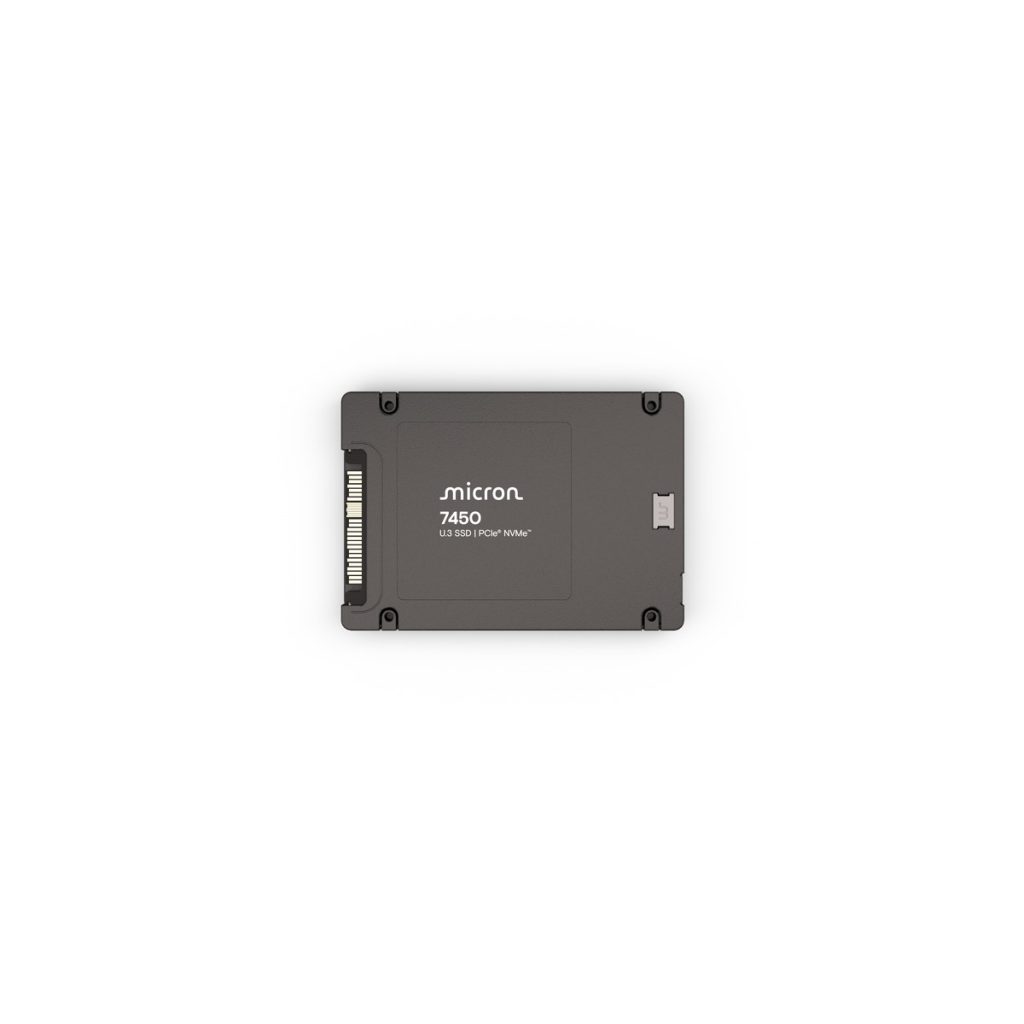
Infrastructure Architect: “Micron 7450 PRO. 1,000K read IOPS, 1 DWPD, 7.68TB, but here is the difference: the 7450 uses 176-layer NAND with Micron’s in-house controller. The sustained write performance after the SLC cache is exhausted is 50% higher than the PM9A3 because the controller does not rely on a large SLC buffer to hit its spec sheet numbers. Your workload is 70% writes, sustained, all day. You need write consistency, not peak read IOPS.”
They ordered the 7450 PRO. The Q4 holiday traffic came and went without a single storage-related incident ticket.
Technical Specifications
| Parameter | Specification |
|---|---|
| Capacity | 7.68TB (also: 1.92TB, 3.84TB, 15.36TB, 30.72TB) |
| Form Factor | 2.5-inch U.3 (15mm, backward-compatible with U.2) |
| Interface | PCIe 4.0 x4, NVMe 1.4 |
| NAND Type | Micron 176-layer 3D TLC (Replacement Gate, RG architecture) |
| Controller | Micron in-house enterprise controller with DRAM cache |
| Sequential Read (128K) | Up to 6,800 MB/s |
| Sequential Write (128K) | Up to 5,600 MB/s |
| Random Read (4K, QD256) | Up to 1,000K IOPS |
| Random Write (4K, QD256) | Up to 410K IOPS |
| 70/30 Mixed Random (4K, QD256) | Up to 480K IOPS |
| Latency (4K Random Read, QD1) | ~75 microseconds |
| Latency (4K Random Write, QD1) | ~15 microseconds |
| Endurance | 1 DWPD (5 years), 14,016 TBW (7.68TB model) |
| MTBF | 2,000,000 hours |
| SLC Cache | Dynamic (not fixed) — writes bypass SLC cache when it fills, maintaining sustained write rate |
| Power (Idle / Avg Read / Avg Write / Max) | 5W / 12W / 16W / 20W |
| Power Loss Protection | Capacitor-backed, full write cache protection |
| End-to-End Data Protection | T10 DIF/DIX, PI (Protection Information) pass-through |
| Security | TCG Opal 2.0, SED, FIPS 140-2 (SKU-dependent), secure erase (instant, crypto-erase) |
| Physical | 100.45 x 69.85 x 15.00 mm, ~140g |
| Temperature | 0°C to 70°C |
| Warranty | 5-year limited (manufacturer) |
Micron 7450 PRO vs Samsung PM9A3 — The Write Consistency Difference
| Scenario | Micron 7450 PRO | Samsung PM9A3 |
|---|---|---|
| Sustained sequential write (after SLC cache exhaustion) | ~2,400 MB/s (high consistency, dynamic SLC) | ~1,600 MB/s (lower after static SLC fills) |
| 70/30 mixed IOPS | 480K IOPS | ~350K IOPS |
| Write latency (QD1) | 15 microseconds | ~22 microseconds |
| NAND layer count | 176-layer (RG architecture, newer) | 128-layer (V-NAND V6) |
| Max capacity | 30.72TB (industry’s highest U.3) | 15.36TB |
| Best for | Write-heavy, sustained throughput, database | Mixed read-write, general enterprise |
Compatible Platforms
U.3 form factor, backward-compatible with all U.2 NVMe backplanes. Compatible with Dell PowerEdge R660, R760, R770, R7715, R860, R960, xFusion FusionServer V7, Lenovo ThinkSystem V3/V4. Works with PERC H755N, H965i, or direct PCIe passthrough via tri-mode controllers.
Source Through Xincuan
competitive pricing on the full 7450 PRO capacity range. 3-year warranty, global shipping.