 Xincuan Server | Enterprise Server Hardware Supplier
The SSD That Survives 100 Drive Writes Per Day — For 5 Years Straight
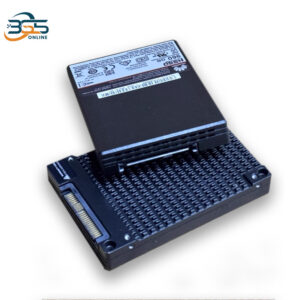
Every NVMe SSD in this catalog has an endurance rating measured in DWPD (Drive Writes Per Day). The Samsung PM9A3 is 1 DWPD. The Kingston DC1500M is 3 DWPD. The Intel Optane P5800X is 100 DWPD. Not 10. One hundred. The P5800X writes its entire 1.6TB capacity 100 times every day for five years — 292,000 TBW of total endurance — because it uses Intel Optane memory (3D XPoint), a fundamentally different storage technology with write endurance measured in orders of magnitude beyond NAND flash. For the write-absolutely-everything workloads — OLTP transaction logs, ZFS SLOG/ZIL, Ceph WAL, Kafka streams, database write-ahead logs — the P5800X is the only drive that never becomes the bottleneck and never wears out.
Technical Specifications
| Parameter | Specification |
|---|---|
| Capacity | 1.6TB (also: 400GB, 800GB, 3.2TB) |
| Form Factor | 2.5-inch U.2 (15mm) |
| Interface | PCIe 4.0 x4, NVMe 1.3 |
| Storage Technology | Intel Optane Memory (3D XPoint) — not NAND flash |
| Sequential Read (128K) | Up to 7,200 MB/s |
| Sequential Write (128K) | Up to 4,200 MB/s |
| Random Read (4K, QD256) | Up to 1,500K IOPS |
| Random Write (4K, QD256) | Up to 1,500K IOPS |
| Latency (4K Random Read, QD1) | ~2.5 microseconds (read), ~5 microseconds (write) |
| Endurance | 100 DWPD (5 years), 292,000 TBW (1.6TB model) |
| MTBF | 2,000,000 hours |
| Power (Idle / Max) | 5W / 18W |
| Power Loss Protection | Full data path protection, power-loss data protection (never loses committed writes) |
| Security | TCG Opal 2.0, SED |
| Physical | 100.45 x 69.85 x 15.00 mm |
| Temperature | 0C to 70C |
| Warranty | 5-year limited (manufacturer), 292,000 TBW limit |
Optane vs NAND — The Latency and Endurance Gap
| Attribute | Optane P5800X | Best NAND (Samsung PM9A3) | Difference |
|---|---|---|---|
| 4K Random Read Latency (QD1) | 2.5 microseconds | 75 microseconds | 30x faster |
| 4K Random Write Latency (QD1) | 5 microseconds | 15 microseconds | 3x faster |
| Endurance (1.6TB model) | 292,000 TBW (100 DWPD) | 14,016 TBW (1 DWPD) | 21x more writes |
| Write IOPS (sustained, no SLC falloff) | 1,500K, consistent | ~180K, drops after SLC cache fills | 8x more, consistent |
| Technology | 3D XPoint (phase-change) | NAND flash (charge trap) | Fundamentally different physics |
Where the P5800X Earns Its Price
- ZFS SLOG/ZIL device: ZFS writes every synchronous transaction to the SLOG before acknowledging. A NAND SLOG at 75 microseconds latency adds that delay to every fsync. An Optane SLOG at 5 microseconds makes fsync nearly free. ZFS deployments with Optane SLOG report 10-20x write latency improvement vs NAND SLOG.
- OLTP transaction logs (SQL Server, Oracle): Every commit waits for the WAL write. Optane’s 5-microsecond write latency removes the commit bottleneck — the difference between a database that bottlenecks on disk and one that bottlenecks on the application logic.
- Ceph WAL/DB: Ceph OSDs write WAL and DB to the fast tier. Optane WAL devices absorb the write storm during cluster rebalance without dropping IOPS.
- Write caching tier: For write-heavy workloads where a 3 DWPD NAND drive wears out in 3 years, the P5800X’s 100 DWPD rating is effectively permanent. It will outlast the server.
Compatible Platforms
U.2 NVMe, compatible with Dell R660, R760, R770, R7715, R860, R960, xFusion FusionServer V7, Lenovo ThinkSystem V3/V4. Requires NVMe driver with Optane support (in-box on Linux 5.x+, Windows Server 2022+, ESXi 7.0+).
Source Through Xincuan
Factory-direct pricing on Optane P5800X. 3-year warranty, global shipping.