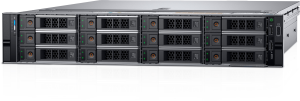
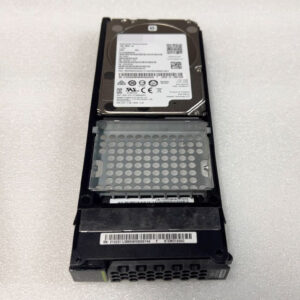
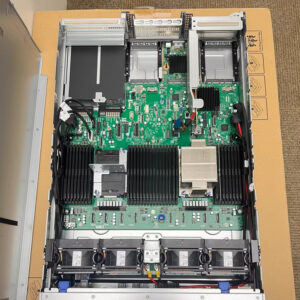
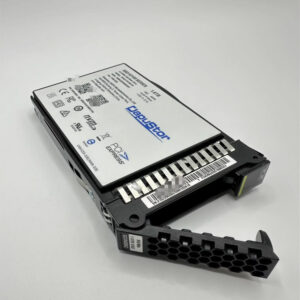
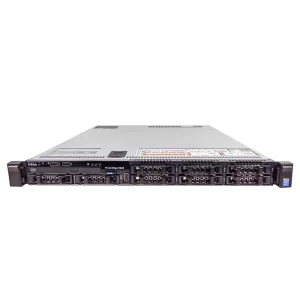
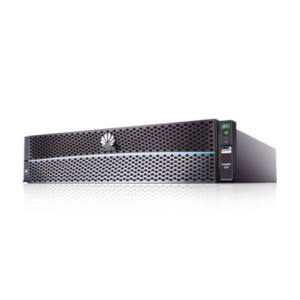
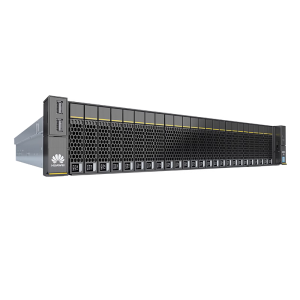
 Sell Dell/Xfusion/Huawei server,From China.
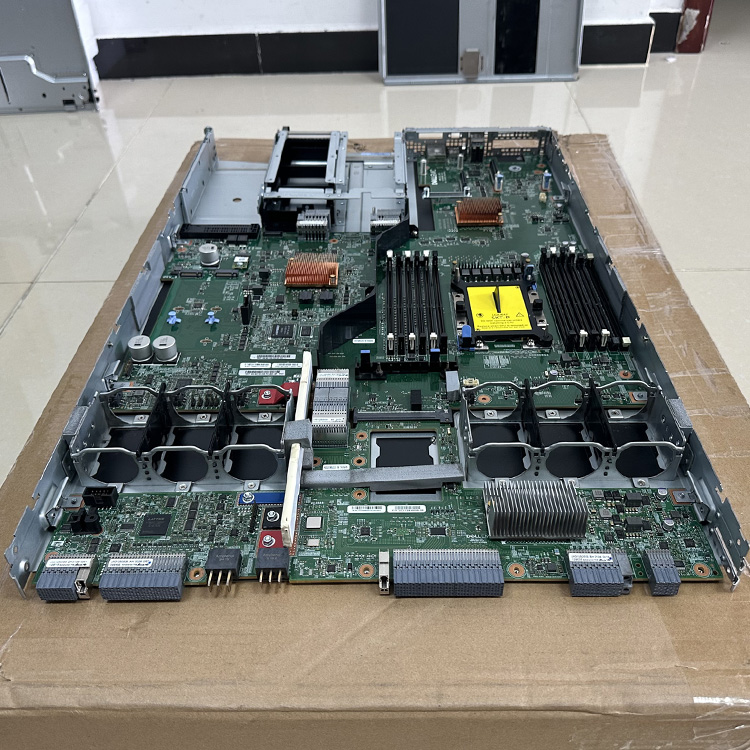

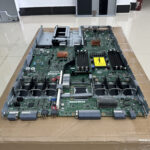
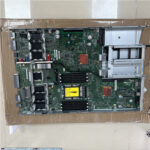
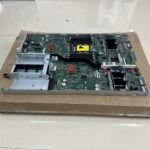
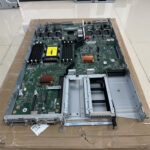
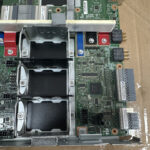
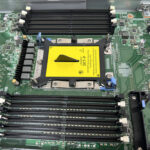
Dell PowerStore enterprise storage devices are groundbreaking, leveraging advanced storage technologies and intelligent automation to elevate operational agility to new heights
Leveling the playing field to fully unlock the value of data. A single unified platform supports vertical/horizontal scaling, enabling accelerated processing of data blocks, files, and vVols workloads, allowing you to
Keep pace with rapidly changing business needs. Optimize DevOps through automated workflows and extensive support for containerized applications, while leveraging deep integrations to simplify your
The overall ecosystem enables you to allocate advanced PowerStore services from your chosen management framework.
PowerStore equipped with Intel ® xeon ® Scalable processor and dual port Intel ® Optane ™ Solid state drives and NVMe over fabric networks (FC)
The flexible full NVMe design of TCP can bring low latency end-to-end performance experience to various workloads. Data reduction function, intelligent automation, proactive resources
Balance, predictive analysis, and uninterrupted software and hardware upgrades are always enabled to sustainably optimize your storage environment, ensuring timely updates and easy management,
Even if your needs change over time.
Each device in the node includes two active/active nodes
Processor 2 Intel Xeon CPUs, 24 cores, 2.2 GHz
Memory 192 GB
Maximum number of drives 25
Basic cabinet 2U cabinet with dual active/active nodes and twenty-five (25) 2.5 “NVMe drive slots
Each cabinet has 2 redundant power supplies (PS) to power PowerStore devices.
Data Resilience Dynamic Resilience Engine (DRE), which can prevent multiple drives from failing simultaneously
Maximum number of mezzanine cards 2 2
Maximum number of IO modules 3 4
Maximum number of front-end ports (all types) 24
Maximum 16/32 Gb FC port count 16
Each device has a maximum of 10 Gbase-T/SCSI ports and 16 ports
The maximum number of 10/25 GbE/SCSI ports per device is 244
Maximum raw capacity of 5 and 6 1.20 PBe
(384 TB, 349 TiB original capacity)
The maximum capacity of each cluster is 5 4.80 PBe
1- Each horizontally expanding cluster can be composed of a maximum of 4 devices combined
2- One mezzanine card per node, mirrored
3- Each node has two IO modules, which have been mirrored.
4- Four (4) onboard ports by default
5- The calculation of effective capacity assumes an average data reduction rate of 4:1. The actual results may vary, please refer to PowerSizer for capacity data in your environment. The maximum capacity is determined by the driver provided at the time of purchase
The size of the device varies. The maximum logical capacity supported by each device is 8 EB. The raw value is based on the original base capacity of the drive supplier. TB is a decimal system with a base of 10
(1000x1000x1000x1000)。 TiB is binary with a base of 2 (1024×1024 x 1024 x 1024).
6- DC power supply equipment does not support expanding disk racks
Maximum number of initiators 2000
Maximum number of data block volumes/clones (FC/iSSI) 1500
Maximum number of data block volumes/clones (NVMe oF) 1000
The maximum number of volumes per volume group is 128
The maximum number of volume groups is 125
Maximum volume size 256 TB
Maximum number of snapshots (data blocks) 50000
Maximum number of user file systems 1500
Maximum number of NAS servers 50
The maximum file system size is 256 TB
Maximum vVols storage container quantity 50
Maximum vVols quantity 9000
Please refer to the Dell Simple Support Matrix on delltechnologies.com for the supported operating systems
Maximum number of devices 4 Maximum number of initiators 2000
The maximum number of front-end ports is 96, and the maximum number of initiators in one initiator group is 1024
Maximum number of SCSI sessions 2048 Maximum number of volumes and vVols 32000
The maximum number of drives and maximum raw capacity for PowerStore clusters depend on the device level limitations mentioned above.
Provide connection options through mezzanine cards and IO modules, including NFS/SMB connections for files, as well as FC and SCSI host connections for data block storage (related)
Please refer to the table above for the number of modules supported by each node.
Connection options
type
Instructions
Details
Mezzanine card/IO module
Two port 10 Gb/s fiber optic module (data block)
Two port 10 GbE IP/iSSI module. Use SFP+fiber optic connection or active/passive
Dual axis copper wire connection to Ethernet switch
Mezzanine card/IO module*
Four port 25 Gb/s fiber optic module (file and data)
Block)
Four port IP/iSSI module, supporting 25 GbE or 10 GbE. Using SFP+fiber optic cable
Connection or dual axis copper wire connection (10 GbE for active/passive connection, 25 GbE for passive connection)
Connect to Ethernet switch
IO Module
Four port 32 Gb/s fiber channel module (limited to a few)
According to the block)
Four port FC module, with the option to connect at 16 Gb/s or 32 Gb/s. Using multimode optical fiber
SFP and OM2/OM3/OM4 cable connections, directly exchanging with host HBA or FC
Machine connection
IO Module
Four port 10GBASE-T module
Four port 10GBASE-T Ethernet IP/iSSI module, connected to Ethernet via copper wire
switch
IO Module
Four port 25 Gb/s fiber optic module
Four port IP/iSSI module, supporting 25 GbE or 10 GbE. Using SFP+fiber optic cable
Connection or dual axis copper wire connection (10 GbE for active/passive connection, 25 GbE for passive connection)
Connect to Ethernet switch
Due to each node being connected to one end of two redundant configuration pairs of GbE ports, the host can still continue to access the driver in the event of a node or port failure
The device.
Drive type
interface
Original capacity based on 10*
NVMe TLC SSD
PCIe
1.92 TB
Original capacity based on 2**
NVMe TLC SSD
1.7466 TiB
PCIe
3.84 TB
NVMe TLC SSD
3.4931 TiB
PCIe
7.68 TB
NVMe TLC SSD
6.9863 TiB
PCIe
15.36 TB
13.9707 TiB
*Supplier’s original TB based on 10 (Byte X (1000 x 1000 x 1000 x 1000))
**Supplier’s original TiB with a base of 2 (Byte X (1024 x 1024 x 1024 x 1024))
All drives have 512 bytes per sector.
All drives are SED. FIPS 140-2 or 140-3 Level 2 Verification Driver
The tool is provided in the form of options. For more guidance, please consult Dell or partner sales
Sales representative.