 Xinchuan Server | Enterprise Server Hardware Supplier
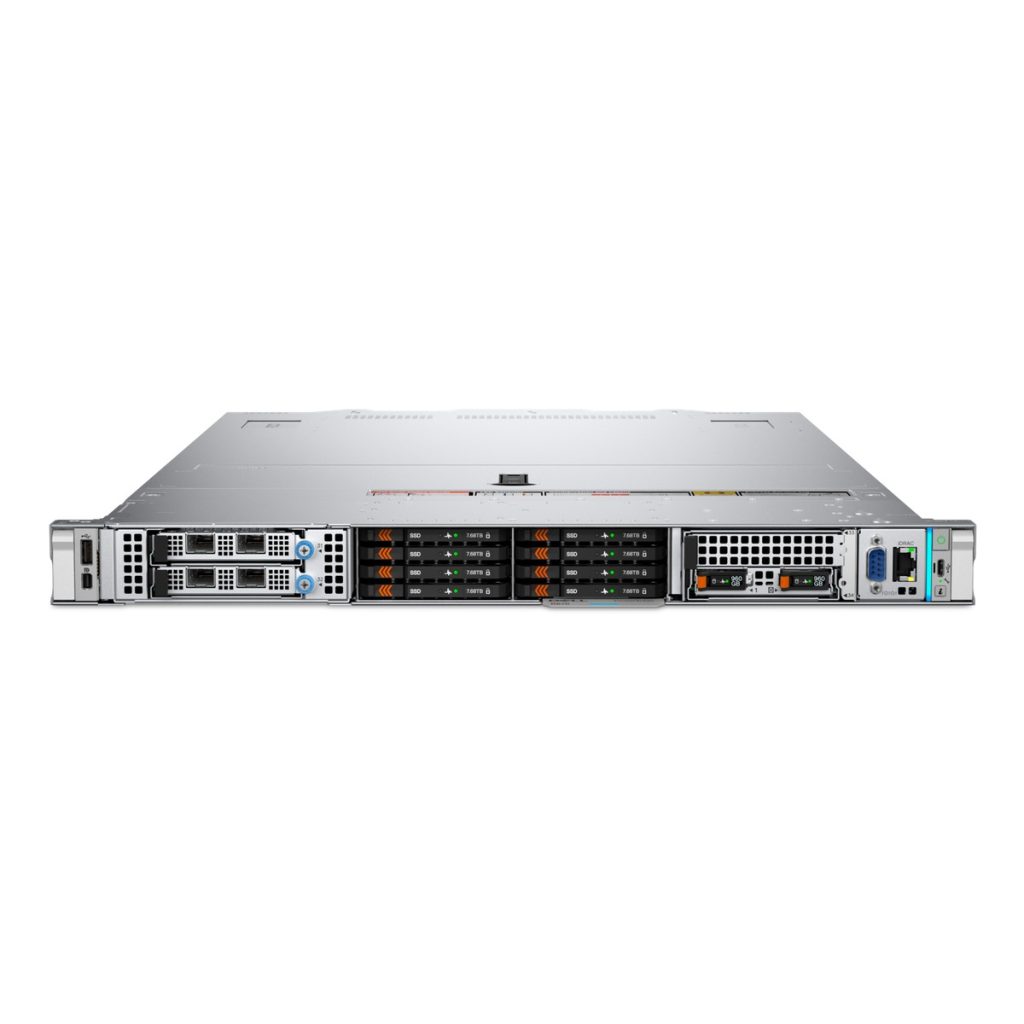
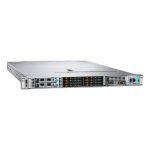
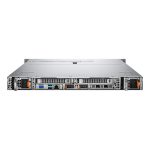
Why R660 Fleets Are Moving to the R670
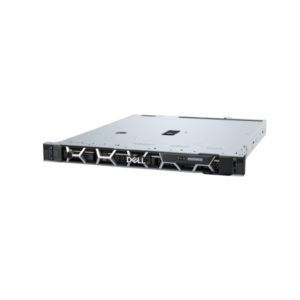
The R660 was the 1U workhorse of the Xeon Scalable 4th-generation era. The R770’s 1U sibling, the PowerEdge R670, replaces it with the Intel Xeon 6 platform – and the differences are not a refresh, they are a generation change: DDR5 at 6400 MT/s instead of 5600, EDSFF E3.S NVMe bays instead of 2.5-inch cages, the DC-MHS service architecture, and integrated 88-lane PCIe Gen5 per CPU.
This guide walks the migration from an R660-class fleet to the R670 using the official Dell technical-guide data, so the decision is spec-for-spec before a single quote is issued.
R670 vs R660: What Actually Changed (Official Comparison)
| Feature | PowerEdge R670 | PowerEdge R660 |
|---|---|---|
| Processors | 2x Intel Xeon 6 (up to 144 E-cores / 86 P-cores per CPU) | 2x Xeon Scalable 4th/5th Gen |
| Memory speed | DDR5 up to 6400 MT/s | DDR5 up to 5600 MT/s |
| DIMM slots | 32 DDR5 RDIMM (registered ECC) | 32 DDR5 RDIMM |
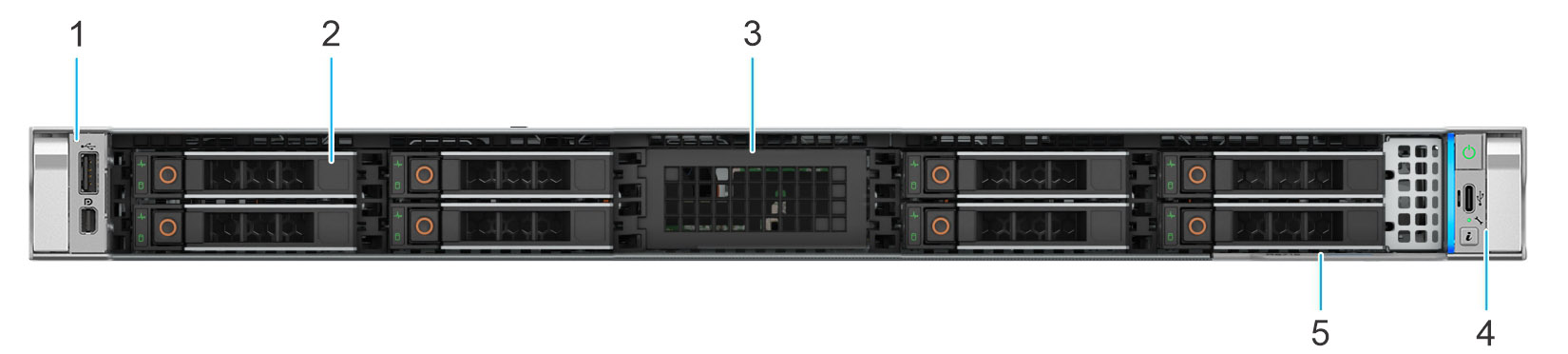
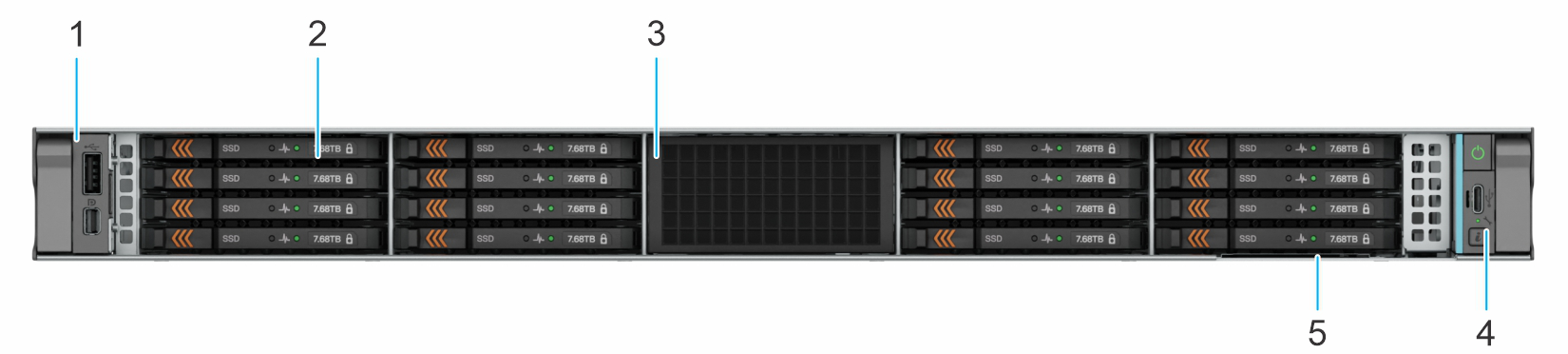
| Front storage | 8-20x EDSFF E3.S NVMe (up to 1228.8 TB) | 8-14x 2.5-inch / E3.S |
| PCIe slots | Up to 3×16 Gen5 | 3x Gen4 slots |
| Service architecture | DC-MHS: DC-SCM secured control module, tool-less PSU/fan | Classic 16G service model |
| Dimensions / weight | 42.8 x 482 x 809-829 mm / 20.42 kg | 42.8 x 482 x ~815 mm / 22.51 kg |
Source: Dell PowerEdge R670 Technical Guide (Rev A07, May 2026).
Full Specifications
| Attribute | Specification |
|---|---|
| Form factor | 1U rack server |
| CPU | 2x Intel Xeon 6, up to 144 E-cores / 86 P-cores per socket, 350W TDP max |
| Memory | 32 DDR5 RDIMM slots (16 per CPU), registered ECC, up to 6400 MT/s |
| Storage front | No-backplane, 8x E3.S, 16x E3.S (983 TB), 20x E3.S (1228.8 TB), 8x 2.5-inch SATA/NVMe, 10x 2.5-inch SATA; 2x E3.S rear |
| PCIe | Up to 3×16 Gen5 slots; 88 integrated PCIe 5.0 lanes per CPU; CXL 2.0 on P-core SKUs |
| Networking | 2x OCP NIC 3.0 slots (front or rear I/O configuration), 1GbE-400GbE |
| Boot | BOSS-N1 DC-MHS: HW RAID 1, 2x M.2 NVMe 480/960 GB (or M.2 interposer) |
| Power | 800/1100W Platinum, 1500W Titanium, 800/1100W Titanium, 700W Titanium, 1400W -48VDC, 240VDC/277VAC & 1800W Titanium HLAC options – hot-swap, full redundancy |
| Dimensions / weight | 42.8 x 482 x 809.04-829.44 mm; 20.42 kg (45.02 lb) |
| Environment | 10 deg C to 35 deg C operating ambient (extended ranges supported) |
Parameter Deep-Dive
Networking
Two OCP NIC 3.0 slots sit on the front (cold-aisle front-I/O build) or the rear (rear-I/O build), with card options spanning 1GbE BASE-T through 100GbE/400GbE. A dedicated iDRAC management port is always present, and the DC-SCM carries the management fabric on the DC-MHS architecture – no dedicated PERC on the front, keeping the airflow open for drives.
Front Panel and I/O
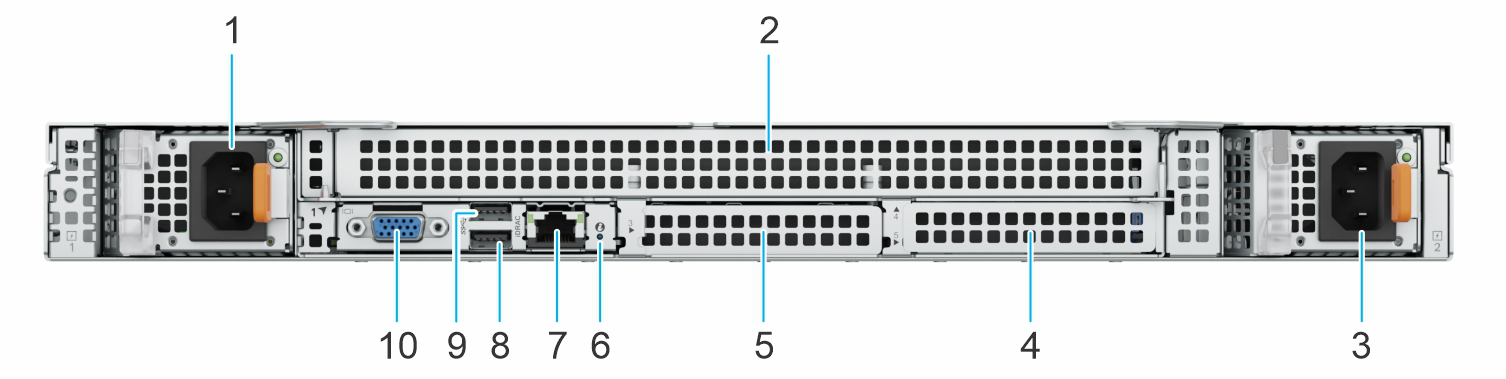
The right control panel carries the power button with LED, USB 2.0 Type-C, system ID button, ambient temperature sensor, host status LED and system health indicator. Front-I/O builds add optional USB 2.0, Mini-DisplayPort and DB9 serial on the cold aisle; rear-I/O builds put 2x USB 3.1 and VGA at the back.
Riser and PCIe Gen5
Each Xeon 6 CPU integrates 88 PCIe 5.0 lanes (UPI at 16/20/24 GT/s), feeding up to 3×16 Gen5 slots via the risers. Accelerator support tops out at 3x 75W single-width cards; the CXL 2.0 memory-pooling path is available on P-core SKUs for scale-up memory tiers.
RAID and Boot
Boot is handled by the BOSS-N1 DC-MHS – hardware RAID 1 across 2x M.2 NVMe (480/960 GB) – or an M.2 interposer on the same DC-MHS slot. External storage attaches via H965e/HBA355e; the front PERC slot is intentionally omitted to maximize E3.S airflow and capacity.
Security
PowerEdge platform security applies at the silicon level: UEFI Secure Boot, TPM 2.0, a silicon root of trust, and signed firmware verified on every update path. The DC-SCM adds physical isolation of the management plane from the compute board – a server that can be serviced without exposing management credentials.
Management
iDRAC with Lifecycle Controller, iDRAC Direct (USB), and the iDRAC RESTful API with Redfish cover out-of-band management, virtual media, telemetry and automation – SNMP and the full OpenManage Enterprise stack are supported for fleet monitoring.
Operating Systems
Certified across VMware ESXi 8, Microsoft Windows Server 2022/2025, Red Hat Enterprise Linux 9, SUSE Linux Enterprise Server 15, and Ubuntu 22.04/24.04 LTS.
Workload Profile: Where the 1U Xeon 6 Fits
The R670 targets four workload families, and each one stresses a different part of the spec:
- Cloud-native microservices: 144 E-core SKUs give the highest core density per 1U for horizontally scaled container fleets – the E-core design trades single-thread speed for massive parallelism at low power.
- Virtualization: 32 DIMMs at 6400 MT/s plus 3×16 Gen5 I/O handle dense VM consolidation; the P-core variants carry the single-thread workloads comfortably.
- HPC and analytics: 88 PCIe 5.0 lanes per CPU feed InfiniBand/400GbE and NVMe tiers without oversubscription.
- Software-defined storage: the 20x E3.S front bay (1.2 PB flash per node) turns the 1U into an all-NVMe SDS brick – pair with Ceph/VSAN-class software for a 4U-equivalent density story.
Where the R670 Sits in the Xeon 6 Line
| Platform | Form | Design point | Pick when |
|---|---|---|---|
| R470 | 1U | 1x Xeon 6, 16 DIMM, 8/16x E3.S, 4x Gen5 | Single-socket price sensitivity, web/edge |
| R670 | 1U | 2x Xeon 6, 32 DIMM 6400, 8-20x E3.S, 3×16 Gen5, 2x OCP | 1U density with dual-socket compute (this platform) |
| R770 | 2U | 2x Xeon 6, 32 DIMM 6400, 8-40x E3.S, 2x 450W GPU | GPU inference / larger storage + accelerators |
If the workload fits one socket and 16 DIMMs, the R470 saves money; if it needs accelerators beyond 3x 75W, the R770 takes over. The R670 is the middle – the most common 1U enterprise decision point in 2026.
Configuration Advice Before You Quote
- Memory: for 6400 MT/s full-speed operation, populate 1 DIMM per channel first (16 slots at 1DPC); 2DPC fills 32 slots but drops to the platform’s 2DPC speed – match density vs speed to the workload.
- E3.S media: start with Gen4 E3.S drives for the flash tier today; the Gen5 bays accept them at full Gen4 speed and leave headroom for later media upgrades.
- Boot: order the BOSS-N1 DC-MHS 960GB pair – two M.2 in hardware RAID 1 keeps boot independent of the data bays.
- PSU: 1100W Platinum covers most builds at the 50-60% efficiency sweet spot; step to 1500W Titanium for max memory plus 20-drive configs, or DC PSUs for telco/HVDC sites.
- I/O: choose front-I/O vs rear-I/O at quote time – it changes the OCP card location and cable management, and the bezel option is front-I/O dependent.
Migration Path: R660 to R670 in Four Steps
- 1. Inventory workloads. R670 keeps the 1U density footprint – same rack slots, same rail kit class, lower weight (20.42 kg vs 22.51 kg).
- 2. Re-plan storage. E3.S Gen5 bays change media selection: budget Gen4 E3.S drives for immediate need, keep the 20-bay option open for Gen5 flash later.
- 3. Re-certify boot. BOSS-N1 DC-MHS is the same RAID-1 M.2 model – clone the boot strategy, order the 960GB variant for larger baselines.
- 4. Stagger cutover. Move the least critical 1U tier first (cloud-native / web front ends), validate telemetry through iDRAC Redfish, then scale the fleet.
Buying FAQ
- R670 or R660? R670 for new 1U capacity on Xeon 6 (6400 MT/s, E3.S, Gen5, DC-MHS); R660 remains valid for legacy-fleet consistency at lower acquisition cost.
- Front I/O or rear I/O? Front I/O suits cold-aisle hot-swap service; rear I/O keeps ports away from the cold aisle for security-tight environments.
- What PSU do I need? 800/1100W Platinum for standard builds; 1500W Titanium for max-DIMM/max-drive configs; DC options (-48VDC, 240VDC/277VAC) for telco and HVDC racks.
- Can it take GPUs? Up to 3x 75W single-width accelerators – this is a density/compute 1U, not a GPU server; for accelerators see the R770 or XE9680.
- Warranty and support? competitive pricing, 3-year warranty, global shipping, free configuration consultation.
- Is the R670 liquid-cooled capable? Yes – the technical guide lists optional Direct Liquid Cooling (DLC) for required CPU SKUs, useful in high-density racks where 1U air cooling budget is tight.
- Can I mix E3.S and 2.5-inch bays? No – the bay options are mutually exclusive per backplane order. Pick the E3.S 20-bay build for all-flash density or the 2.5-inch universal build for SAS/SATA flexibility.
- What is the DC-SCM exactly? The Data Center Secured Control Module is the DC-MHS management board carrying iDRAC, the dedicated management Ethernet, and M-PESTI sideband – it is removable and common across the Xeon 6 PowerEdge family, simplifying spare-parts logistics.
Planning an R660-to-R670 migration? As an authorized Dell partner we supply the R670 with competitive pricing, 3-year warranty, global shipping and free consultation on configuration – including E3.S media selection, memory topology planning and PSU sizing against your actual power rate. Contact us for a custom quote, or browse our full PowerEdge range.