 Server Xincuan | Fornitore di hardware per server aziendali
Your Database Needs 3 TB of Memory. Your Server Has 2 TB of DRAM Slots. Now What?
This is the moment when the budget meeting gets tense. Option A: buy a 4-socket R860 with 64 DIMM slots at $85,000 more. Option B: live with the performance bottleneck. Option C was not on the table because most IT teams do not know it exists — Intel Optane Persistent Memory 300 Moduli di serie, which plug into the same DDR5 DIMM slots as DRAM, but deliver 512 GB per module instead of 64-256 GB. Populate four Optane modules in four DDR5 channels, and you add 2 TB of memory to a server that was already full of DRAM — without adding a single DIMM slot, CPU socket, or server node.
Specifiche tecniche
| Parametro | Specifica |
|---|---|
| Modello | Intel Optane Persistent Memory 300 Serie (Crow Pass, 4th Gen Xeon) |
| Capacità | 512 GB per module (also: 128 GB, 256 GB) |
| Memory Technology | Intel Optane (3D XPoint) — byte-addressable, persistent, non-volatile |
| Fattore di forma | DDR5 DIMM (DDR-T2 interface, 288-spillo) |
| Interfaccia | DDR5 memory bus — connects to CPU memory controller, not PCIe |
| Memory Mode (App Direct) | Byte-addressable persistent memory accessed via DAX (Direct Access) filesystem or PMDK library. Data survives power loss. |
| Memory Mode (Memory Mode) | Volatile, used as system memory with DRAM as cache. OS sees total Optane capacity as volatile RAM. DRAM acts as L4 cache. |
| Latency (App Direct, 4K random read) | ~350 nanoseconds (vs ~90ns DRAM, ~10,000ns NVMe SSD) |
| Bandwidth (per module, sequential read) | ~15 GB/s (DDR5-4400 equivalent) |
| Endurance | 100% of capacity written per day for 5 years (essentially wear-out-proof for data center workloads) |
| Energia (Idle / Active) | ~3W / ~15W |
| Data Persistence | SÌ (App Direct mode) — data retained across power cycles without battery backup |
| Crittografia | AES-256 hardware encryption (always-on, transparent to OS) |
| Compatible CPUs | 4th Gen Intel Xeon Scalable (Rapide di zaffiro), LGA 4677 |
| Max Modules per Socket | 4 Optane modules + 16 DRAM DIMMs per CPU (mixed configuration) |
| Supporto del sistema operativo (Memory Mode) | VMware ESXi 7.0 U3+, 8.0+ | Windows Server 2022/2025 | RHEL 9.x | SLES 15 SP4+ |
| Supporto del sistema operativo (App Direct) | RHEL 9.x, SLES 15 SP4+ (DAX filesystem), Windows Server 2022+ (DAX volume) |
| Garanzia | 3-year (with server) |
Optane PMem vs DRAM vs NVMe — The Performance Pyramid
| Attributo | DRAM (DDR5 RDIMM) | Optane PMem 300 | Nvme ssd (Gen4) |
|---|---|---|---|
| Latency (4K random read) | ~90 ns | ~350 ns | ~75,000 ns (75 us) |
| Bandwidth | ~38 GB/s (5600 MT/s) | ~15 GB/s | ~7 GB/s |
| Max capacity per DIMM/slot | 256 GB (3DS RDIMM) | 512 GB | 30.72 tubercolosi (U.3 SSD) |
| Cost per GB (relative) | 100% (baseline) | ~60% | ~3% |
| Byte-addressable | SÌ (volatile) | SÌ (persistent) | NO (block storage) |
| Data survives power loss | NO | SÌ (App Direct mode) | SÌ |
| Best for | Active working set, hot data | Large in-memory datasets, database buffer pool extension, Redis/Memcached tier | Bulk storage, Dati freddi, backups |
Use Case: Database Buffer Pool Extension
An Oracle database with a 1.5 TB working set and a server with 1 TB of DRAM has a 500 GB gap that spills to NVMe storage — where every page fault costs 75 microseconds instead of 90 nanoseconds. With 2x Optane PMem 300 512 GB modules (1 TB total) in Memory Mode, the DRAM acts as a 1 TB cache backed by the Optane modules as the buffer pool extension. Page faults that would have gone to NVMe instead hit Optane at 350 nanoseconds — over 200x faster. The difference between a database that runs at 10,000 transactions per second and one that runs at 14,000 TPS is this 500 GB gap and how it is filled.
Compatible Platforms
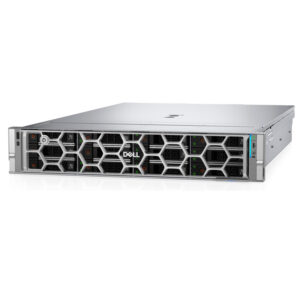
Requires 4th Gen Intel Xeon Scalable (Rapide di zaffiro) processors and BIOS support for Optane PMem. Compatible with Dell PowerEdge R660, R760, R770, R860, R960, xFusion FusionServer V7 (1288H/2288H/2488H/5288/5885H). Not compatible with AMD EPYC platforms (R7715) or earlier Xeon generations (R740, R750). Verify the server BIOS has Optane PMem configuration enabled — not all system boards enable it by default.
Source Through Xincuan
We supply Optane PMem 300 modules pre-installed in Dell and xFusion servers. Factory-direct pricing, 3-anno di garanzia, and global shipping.