 Serveur Xincuan | Fournisseur de matériel de serveur d'entreprise
Why Server RFPs Fail Before the Vendor Responds
The most expensive mistake in enterprise server procurement is not price – it is a specification sheet written before the workload was defined. Procurement teams copy a config from last year’s quote, add “future-proof” adjectives, and send it to five vendors. The result: five different chassis, five different memory topologies, and a 30% price spread that has nothing to do with value.
A workload-first RFP changes the conversation. You describe the job – 2,000 VDI desktops at 60 IOPS each, un 500 TB object store, an inference pipeline serving 40 concurrent LLM requests – and vendors propose the platform. That is how an authorized distributor should be treated in a tender: as an architect, not a box-mover.
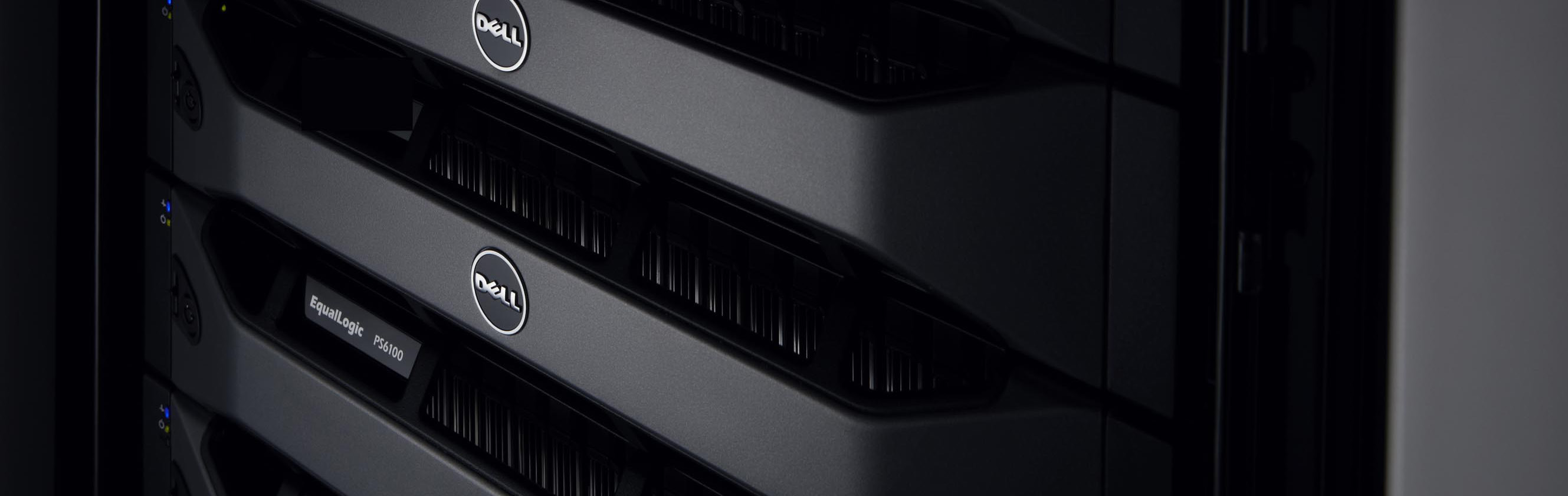
The RFP Decision Framework: Three Filters
Every server requirement should pass three filters before it reaches a specification. If a requirement survives all three, it earns a place in the RFP.
| Filter | Question | What it removes |
|---|---|---|
| Workload-first | What is the measurable performance target per user / per VM / per request? | Specs chosen by habit or vendor marketing |
| Étagère & power reality | Does the config fit our power, cooling, and rack depth budget? | GPU nodes in air-cooled 600mm racks |
| Budget & lifecycle | Does the 5-year TCO beat the alternative, including power and support? | Cheap first invoice, expensive third year |
Le 8 Spec Questions Every Server RFP Must Ask
1. What is the workload’s scaling model – scale-up or scale-out?
Scale-up workloads (SAP HANA, large in-memory databases) need 4-socket or memory-rich platforms. Scale-out workloads (VDI, Kubernetes, object storage) want density per rack unit and predictable per-node cost. A 2U 2-socket PowerEdge R760 avec 32 DDR5 DIMMs serves scale-out; a 4-socket R960 with 64 DIMMs serves scale-up. Ask the vendor to state which model they priced and why.
2. Mémoire: capacity or speed – and at what population?
DDR5 introduces a topology trade-off: à 1 DIMM per channel (1DPC) you get the maximum speed, at 2DPC you roughly double capacity but drop to the platform’s 2DPC speed tier. On Xeon 6 platforms, 32 DIMMs at 6400 MT/s (1DPC) is a different machine than 32 DIMMs at a lower 2DPC speed. Your RFP should state capacity et the required MT/s at that capacity – otherwise you will be quoted the config that is easiest to build, not the one that meets the SLA.
3. Stockage: how many bays, which media tier?
Enterprise storage has converged on three tiers: E3.S Gen5 NVMe for hot data, U.2/U.3 NVMe for capacity, and 3.5-inch HDD for bulk. A scale-out file server may want 44 x 3.5-inch bays (le xFusion 5288 V7 class) while a database wants 16-24 NVMe bays. State bays et media type per tier – “24 baies” is meaningless until you say 24 x E3.S Gen5 or 12 x 3,5 pouces.

4. GPU: power envelope, cooling, and form factor?
An RFP that says “supports GPU” produces useless bids. Specify: accelerator model (L40S for inference, H100/H200 class for training), power class (par exemple. 450W double-width), and how many. A 6U 8-GPU XE9680 demands a different rack plan than a 2U server with one 450W GPU. If total GPU power exceeds roughly 40 kW per rack, liquid cooling stops being optional – state the cooling method in the RFP or expect failed quotes.
5. Réseautage: OCP slots, PCIe Gen5 lanes, and NIC bandwidth?
Modern servers ship with OCP 3.0 slots and PCIe Gen5 lanes that are only useful if the RFP says what they connect to. 100GbE NICs (par exemple. Intel E810 class) need 16 Gen5 lanes each; NVMe-oF needs RoCE support. Ask for: number of OCP slots, PCIe Gen5 x16 slots, and the NIC the vendor will provision by default.
6. Management and security: which BMC, what firmware policy?
Dell ships iDRAC (9 ou 10 on current platforms), xFusion ships iBMC. The RFP should require: out-of-band management included, Redfish API support, démarrage sécurisé, and TPM 2.0 – plus the vendor’s firmware update cadence over the warranty window. Management is where 3-year support costs are actually spent.
7. Lifecycle: warranty, pièces de rechange, and support SLA?
State the warranty term (3 years is the enterprise baseline), the spares strategy (next-business-day on-site vs. depot), and firmware support through the warranty period. For an authorized-distributor supply chain, this is also where you verify the seller can provide factory matching units and genuine parts – the two failure modes of gray-market procurement.
8. TCO: what does the machine cost over 5 years, not on day one?
Power at $0.12/kWh over 5 years roughly equals 40-60% of a server’s purchase price. A 2U node at 800W costs ~$4,200 in electricity alone over 60 months. The RFP should ask vendors to quote typical operating power at your load profile, not nameplate maximum – that single number separates honest bids from box-pushing.
Reference Matrix: Dell PowerEdge vs xFusion V7
| Plate-forme | Facteur de forme | Processeur | Mémoire | Stockage | Best RFP fit |
|---|---|---|---|---|---|
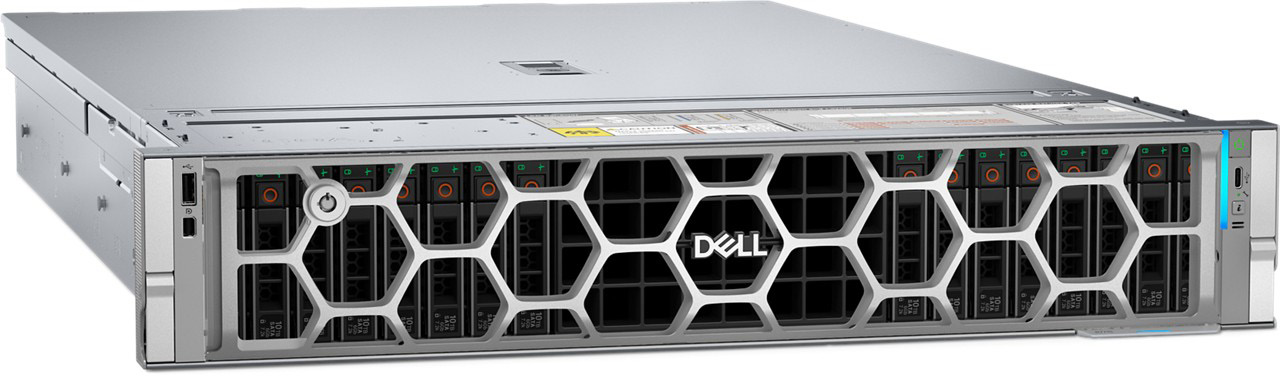
| Dell R770 | 2tu | 2x Xeon 6 (up to 144E/86P cores) | 32 Dr5 6400 MT/s, 8 TB | 8-40x E3.S Gen5 | CHP, Inférence AI, large databases |
| Dell R760 | 2tu | 2x Xeon 4th/5th (jusqu'à 64 noyaux) | 32 Dr5 5600 MT/s, 8 TB | 12× 3,5″ / 24× 2,5″ / 16x E3.S | AI/ML, bases de données, VDI |
| Dell XE9680 | 6tu | 2x Xeon 4th/5th | 32 Dr5, 4 TB | 8× 2,5″ / 16x E3.S | 8x H100/H200-class LLM training |
| xFusion 2288H V7 | 2tu | 1-2x Xeon 4th/5th (up to 385W) | 32 Dr5, 8 TB | 25× 2,5″ / 20× 3,5″, 28 NVMe | SDS, VDI, Monnaie, bases de données |
| xFusion 5288 V7 | 4tu | 1-2x Xeon 4th/5th | 32 Dr5, 8 TB | 44× 3,5″ + 4× 2,5″ | Big data, stockage distribué |
| xFusion G5500 V7 | 4tu | 2x Xeon 4th/5th | 32 Dr5, 8 TB | 24× 2,5″/3.5″, 12 NVMe | Up to 10x DW GPU training/inference |
Five Actions Before You Send the RFP
- Describe the job, not the box. Write workload statements with measurable targets; let vendors propose platforms and defend them.
- Ask for per-workload pricing. “Per-node cost at 2,000 VDI users” beats “per-server list price” for comparison.
- Verify channel legitimacy. Ask for distributor/authorized-partner status and factory-match guarantees – gray-market units fail exactly when you need support.
- Define warranty and spares SLA in the tender. 3-an de garantie, next-business-day parts, and firmware updates belong in the contract, not the brochure.
- Reserve expansion ports. State the growth path (DIMMs free, bays free, PCIe slots free) so the winning bid stays the winning bid in year three.
An RFP built around these eight questions takes an hour longer to write and saves weeks of evaluation. When the responses come back, compare them on the same three filters – workload fit, rack reality, and 5-year TCO – et le 30% price spread collapses into an explainable difference.
Building a server tender? As an authorized partner for Dell and xFusion, we provide factory-direct pricing, 3-an de garantie, expédition mondiale, and free configuration consultation for RFP responses – browse the full range at our products page ou Contactez-nous for spec sheets and custom configurations.