 Serveur Xinchuan | Fournisseur de matériel de serveur d'entreprise
The Power Supply Is the Most Under-Decisioned Part of a Server
Procurement teams spend days on CPU cores and NVMe bays, then let the PSU ride along with the default quote. It is the wrong instinct: the power supply determines uptime (redundancy topology), running cost (efficiency class), and rack viability (bilan de puissance) for the entire 3-5 year life of the node. This guide turns PSU selection into three decisions – size, redondance, efficacité – with the math that makes each one defensible.
Decision 1: Size the PSU Against Real Load, Not Peak
A PowerEdge platform draws from the CPU sockets, DIMM, baies de lecteur, NICs/OCP cards, and any GPUs. Build a load sheet per node:
- CPUs: typical package power for the configured model, not TDP max (Xéon 6 parts run well below TDP at steady state in most workloads).
- Mémoire: roughly 1-1.5 W per DDR5 DIMM depending on density and speed (5600/6400 MT/s classes).
- Disques: ~12 W per NVMe SSD, ~8-10 W per enterprise HDD, plus backplane overhead.
- Réseau: 5-15 W per NIC/OCP card; DPUs add more.
- GPU: the dominant row – a 450W double-width accelerator changes the whole power envelope (voir le R770, which carries 2x 450W or 6x 75W GPU options).
Sum steady-state load, add 20-30% headroom, and pick the PSU size whose 50-60% load point matches that figure – PSUs are most efficient at partial load, not full load. Two 1100W PSUs on a 550W node, Par exemple, run both at ~50%: efficiency peak, and one unit alone covers the node for maintenance.
Decision 2: Redundancy Topology – 1+1, 2+2, and the DC-MHS Era
| Topology | PSUs | Failure behavior | Idéal pour |
|---|---|---|---|
| 1+1 | 2 (one live, one standby) | One PSU failure keeps the node at full load | Standard production nodes |
| 2+2 | 4 (two groups) | Two independent feeds; survives feed loss | 4-douille / critical mission (R860, R960 class) |
| N+N / dual-feed | Paired across A/B PDUs | Survives rack feed or PDU failure | HA clusters, regulated industries |
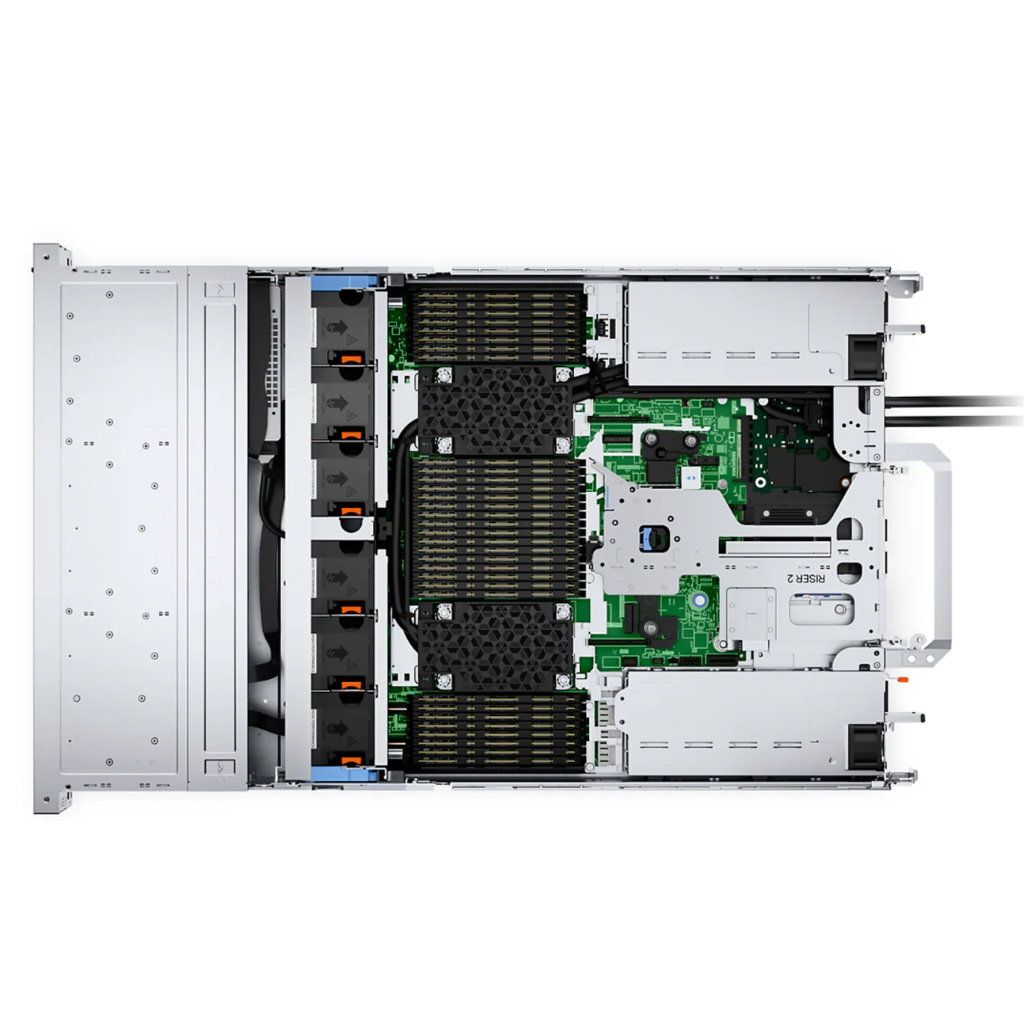
All PowerEdge servers use hot-swappable PSUs – swap without powering down – and the current Xeon 6 generation (R470/R670/R770) moves to the DC-MHS power shelf: tool-less hot-swap PSUs and fans that slide in without screws or cables, with Platinum/Titanium options up to the 2400W class for GPU configurations. On 4-socket scale-up (R960: 64 Emplacements DDR5, 4x 400W-capable GPUs) le 2+2 topology is the default answer, not an option.
Decision 3: Efficiency Class – Le 2% That Compounds
80 PLUS ratings are efficiency at 20/50/100% load: Gold ~90% at 50%, Platinum ~92%, Titanium ~94% (plus stricter low-load performance). The gap sounds small; over 60 months it is a real line item:
| Article | Valeur |
|---|---|
| Node load (example) | 500 W steady state |
| Input at 92% vs 94% efficacité | 543 W vs 532 O (~11.6 W saved) |
| Annual saving per node | ~101 kWh (~$15 at $0.15/kWh) |
| 5-year saving, 100-node cluster | ~50,700 kWh (~$7,600) |
Illustrative math at $0.15/kWh with stated load assumptions; re-run with your power rate and load profile. Titanium PSUs cost more at purchase and win everywhere the node is loaded more than half the time – which in a data center is almost always.
Decision 4: Match the Rack, Not Just the Node
- PDU sizing: 32A/60A per-phase math must cover the cluster at worst case (all nodes at steady state + surge), not the average.
- A/B feeds: wire PSU pairs to two PDUs; a node with both PSUs on one PDU inherits that PDU’s failure.
- UPS: redundant PSUs do not replace a UPS – they cover PSU failure, not grid failure.
- GPU platforms: 8-GPU nodes (XE9680 class) need high-current feeds per rack and often dedicated power – plan the power budget before the rack layout.
Platform Reference (Spec Quick Table)
| Plate-forme | Formulaire | Key power drivers | Typical PSU strategy |
|---|---|---|---|
| R660 / R670 | 1tu | 2x Xéon 6, 8-20x E3.S NVMe | 1+1, Platinum/Titanium 1100W class |
| R760 | 2tu | 2x Xéon, jusqu'à 24 NVMe, 2x DW GPU | 1+1, 1400-2400W by GPU config |
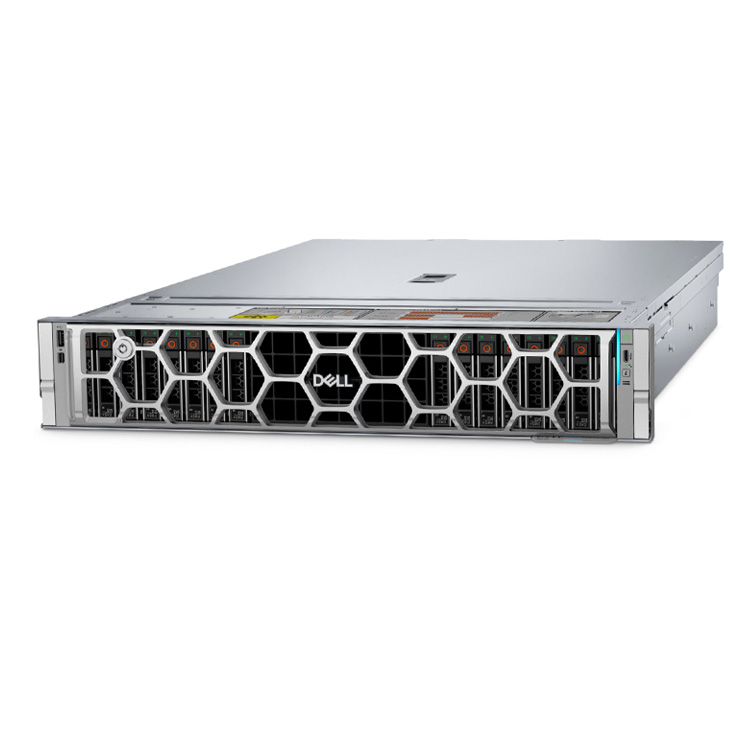
| R770 | 2tu | 2x Xéon 6, 8-40x E3.S, 2x 450W GPU | 1+1, DC-MHS tool-less, 2400W for GPU |
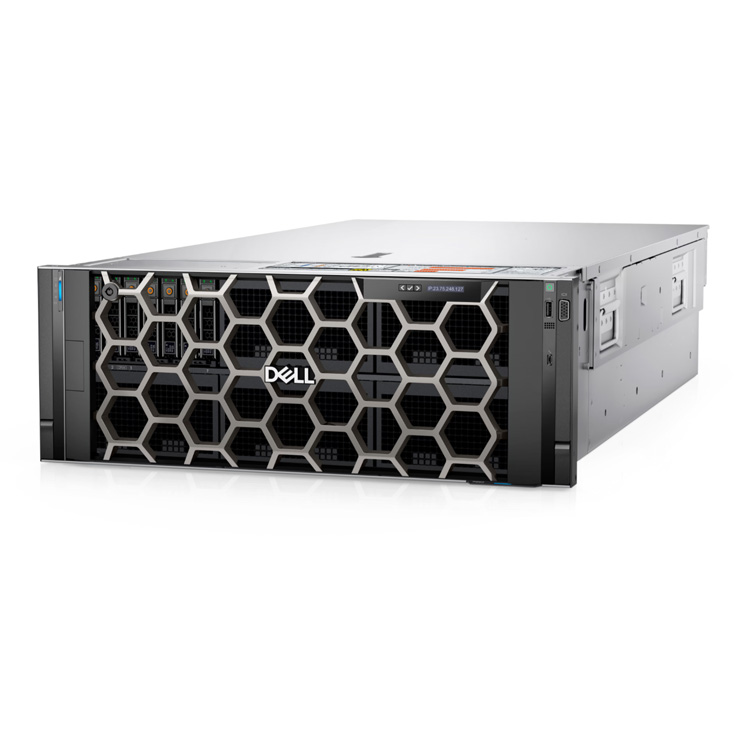
| R960 | 4tu | 4x Xéon, 64 Dr5, 4x 400W GPU | 2+2 dual-feed, Titane |
| XE9680 | 6tu | 8x H100/H200/MI300X | High-current rack feed + dedicated power |
| 2288H V7 / G5500V7 | 2tu / 4tu | 28 NVMe; G5500 up to 10x GPU | 1+1; G5500: high-current + redundant feed |
Voir le XE9680 et xFusion 5288 V7 pages for the GPU and density workloads that drive these power envelopes.
Tension, Cables and Derating: The Details Quotes Get Wrong
PSU output is rated at a specific input voltage, and the delivered wattage derates at lower voltage. A 1100W PSU rated at 240V typically delivers less at 208V (common in US data centers) and less still at 120V – the current draw rises as voltage falls, so the same server on 120V circuits needs more outlets and more cable capacity. Three rules keep the math honest:
- Use the derated number: plan PDUs from the PSU’s rating at your actual rack voltage, not the label maximum.
- Match connectors: C13/C14 for lower-current PSUs, C19/C20 for the 2400W class; a C13 cable on a high-current PSU is a fire risk, not a convenience.
- Count current, not watts: a 32A PDU carries ~7.6 kVA at 240V single-phase – a 2400W GPU node pulls ~10A at full load, so per-phase headroom disappears faster than the watt math suggests.
PSU FAQ
- Do redundant PSUs double consumption? Non – the standby PSU idles near zero; active load is shared across both. Redundancy costs space and purchase price, not running power.
- Can I mix Gold and Titanium PSUs in one node? Dell requires matched PSU pairs; mixing efficiency classes or wattages breaks the redundancy contract and can block firmware updates.
- Is 1+1 enough for a 4-socket node? For single-feed failures yes; for dual-feed (A/B PDU) protection use 2+2, which is standard on R960-class scale-up.
- Why does iDRAC show “PSU redundancy lost”? Usually a firmware mismatch between the two PSUs, a seating issue, or a PDU feed drop – check the SEL log before assuming hardware failure.
- Do PSUs need firmware updates? Oui – efficiency and telemetry fixes ship through the same iDRAC lifecycle path as BIOS; include them in the refresh window.
The PSU Buying Checklist
- Order a spare PSU with each node type – un $300 spare avoids a $3,000 node outage in year three.
- Standardize efficiency: buy Platinum/Titanium across the fleet so energy reporting is one number.
- Match PDU and PSU cables: C13/C19 and voltage (208V vs 240V) change the wattage delivered per outlet.
- Check firmware: PSU firmware updates (via iDRAC) fix efficiency and telemetry bugs – include them in lifecycle management.
- Use telemetry: iDRAC power monitoring shows real per-node load; size year-two purchases from that data, not the quote.
Final Thoughts
Size for real load, pick 1+1 for production (2+2 for 4-socket), choose Platinum/Titanium, and match the rack feed. Those four decisions cost almost nothing at purchase time and shape uptime and electricity for the whole platform life. As an authorized Dell and xFusion partner we quote PSU options with factory-direct pricing, 3-an de garantie, global shipping and free consultation – ask us to model the efficiency class against your power rate when you Contactez-nous, or browse the full range on our products page.